



Delve into our guide to toy certifications.
There are lots of different ecolabels and sustainability certifications out there, and it can be tricky to figure out what they actually mean in real life.
That’s why we’ve created this little guide to toy certifications (as part of ToyAcademy's sustainability strategy). The guide gives you a quick and easy way to look up a certification and understand what it really means for the doll, balance bike, or car track you’re considering. Clear, simple, and helpful, just the way we like it.
This guide will take you through:

What is a certification?
A certification is a kind of proof that a company follows a set of specific rules or standards created by an independent third party. These standards can cover everything from environmental impact and materials to safety, health, and overall product quality.
What makes certifications meaningful is that the companies aren’t the ones checking their own work. Instead, independent experts from outside the company step in - people who don’t work for the brand and who can therefore make fair and objective assessments.
A certification is sort of like taking an exam. You’re not allowed to grade yourself. That’s the teacher’s job. In the same way, independent experts check whether a company actually does what it promises and has its processes and practices in order.
A company only earns its certification once everything is in good order. And a certification doesn’t last forever - it has to be renewed regularly, so things are checked on an ongoing basis.
Getting certified costs money. Companies have to pay for the external audits and the preparation work involved. Still, many choose to get certified to document their responsibility, build trust with customers and partners, and improve their internal processes. Others decide against it to save the time and costs involved, especially if they don’t feel certification is very important to their customers.
Certifications aren’t just for big companies. But since becoming certified requires time, money, and structure, smaller businesses need to consider whether it makes sense for them in terms of their customer base and overall strategy.
Examples of well-recognised toy certifications include the Nordic Swan Ecolabel, FSC, and GOTS.
When you see a certification on e.g. a hobby horse, a swing, or a car track, it is much easier (for us as a company and for you as a customer) to assess whether the toy has truly been made with care for the environment, resources, and people involved. A certification is more measurable and trustworthy than a manufacturer simply claiming “We sell sustainable toys” or “This bubble solution is eco-friendly” without backing up their words with real documentation.
The Allergy Certified label
Allergy Certified is a Danish label that is also used internationally and can be found on products such as toys. The label guarantees that the product does not contain substances in amounts known to cause allergies, interfere with the body's hormones, or be carcinogenic.
CE marking
The CE marking serves as visible proof that a product complies with EU legislation. Toys sold in the EU must carry the CE mark, otherwise stores aren’t allowed to sell them.
The EU has strict regulations and requirements for toys regarding (among other things):
-
Mechanical safety (no sharp edges or small parts that children can swallow)
-
Fire safety
-
Chemicals (for example, limits on heavy metals and phthalates)
-
Electrical safety (if the toy contains electronics)
Cosmos Natural and Organic Certification for Cosmetics
Cosmos (Cosmetic Organic and Natural Standard) is one among many certifications that set different requirements for a product’s ingredients and manufacturing.
We came across the certification when we added some new face paint to our webshop and discovered that:
-
To earn the Cosmos certification, 95% of the plant-based ingredients must come from organic farming.
-
Overall, at least 20% of the total product must be of organic origin.
ECOCERT
ECOCERT is a French ecolabel that requires a certain percentage of a product’s content to be of organic origin. You’ll often spot the label on products like skincare and face paint.
That said, the label doesn’t guarantee that 100% of the ingredients are organic, nor does it promise that the product is completely free from allergens (substances that may cause allergic reactions).
However, ECOCERT-certified products are always free from added fragrances and colourants.
Certifications such as Cosmos (mentioned above) and GOTS (which we’ll get to later) fall under ECOCERT.
EN 71
EN 71 is a set of safety standards for toys sold within the EU.
Several of the requirements are similar to those of the CE mark. In fact, CE marking may only be affixed if a toy complies with the EU Toy Safety Regulation, and that compliance is typically documented through EN 71 testing.
EN 71 covers areas such as:
-
Mechanical and physical safety (for example, making sure there are no sharp edges)
-
Flammability
-
Chemicals (including limits for potentially harmful substances)
On top of that, EN 71 includes specific rules for certain types of toys, such as finger paints, children’s cosmetics, chemistry sets, swings, and more.
FSC and PEFC
These labels are found on wooden products. FSC and the lesser-known PEFC both show that the wood comes from sustainable forestry managed with attention to sustainability and good working conditions.
FSC stands for Forest Stewardship Council and is an international certification with a strong focus on biodiversity, safe and fair working conditions and education for forestry workers, promoting democratic principles, and making sure new trees are planted to replace those that are cut down.
PEFC stands for Programme for the Endorsement of Forest Certification. With PEFC-certified wood:
-
No more trees are felled than the forest can naturally regenerate
-
Wildlife and plant life are taken into consideration
-
Forest workers have proper working conditions and safety
-
Local communities and Indigenous peoples’ rights are respected
The two certifications are quite similar overall. FSC often has slightly stricter traceability requirements. PEFC is commonly used in countries that already have high forestry standards, such as the Nordic countries and Central Europe.
GOTS (Global Organic Textile Standard)
You’ll typically find the GOTS label on organic clothing and textiles.
-
To earn the GOTS label, at least 95% of a product's fibres must be organic.
-
If 70–94% of the fibres are organic, the product may instead be described as “made with organic materials”.
-
GOTS also requires compliance with standards for social responsibility and environmental care throughout the entire production chain.
- In addition, the GOTS standard prohibits the use of a range of chemicals, dyes, and bleaching agents.
OEKO-TEX
The OEKO-TEX certification guarantees that no harmful chemicals have been used during production or dyeing, and that any other chemicals the product contains stay within clearly defined safety limits.
You'll also find the OEKO-TEX label on organic textiles
- Products labelled "OEKO-TEX ORGANIC COTTON" are made from 100% organic cotton
- Products labelled "OEKO-TEX ORGANIC COTTON blended" contain at least 70% organic cotton, but may also include other fibres besides cotton
- Textiles may carry the "OEKO-TEX STANDARD 100" label when they contain less than 70% organic cotton.
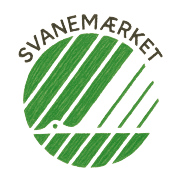
The Nordic Swan Ecolabel
Toys that carry the Nordic Swan Ecolabel are made with care for both the environment and human health, from the choice of materials to packaging and working conditions. The toys may be made from materials such as plastic, foam, wood, textiles, metal, or cardboard, and they must meet requirements that are even stricter than current EU regulations.
Which toys cannot obtain the Nordic Swan Ecolabel?
Toys containing electronics, single-use toys, balloons, products with liquid inside (even if sealed), and toys linked to food products are not eligible for the Nordic Swan Ecolabel.
The Ethical Supply Chain Program (ESCP) (formerly ICTI)
The Ethical Supply Chain Program (ESCP) is formerly known as the ICTI Ethical Toy Program. The program aims to ensure a higher level of social sustainability across the toy industry on a global level.
ESCP grants certification to (toy) factories. Among other things, ESCP requirements include:
- Working hours must not be excessive, and all overtime must be voluntary
- Child labour is strictly prohibited
- Working conditions must be safe
- Workers have the right to join labour unions
In addition, the program focuses on improving conditions for employees with children, including better access to childcare and more flexible working hours.
The toy brand Tender Leaf toys has earned the ICTI Ethical Toy Program seal of approval for their socially and environmentally responsible supply chain.
ISO 14001 – for companies that back up their words with action
ISO 14001 is an internationally recognised certification that indicates a company is making a structured, committed effort to protect the environment.
When a company is ISO 14001 certified, it means:
-
the company has identified how its activities impact the environment
-
the company has made a plan for how to reduce its environmental footprint
-
independent third parties are auditing the company to ensure it is following the plan and continuously striving to do better
The certification doesn’t guarantee that a company is “completely green.” But it does show that the company knows exactly how green (or not so green) it is, and that it is making ongoing efforts to improve.
For you as a consumer, this provides peace of mind. It shows that the company isn’t just talking about caring for the environment but is actually working to be greener in deliberate, documented ways. A company without ISO 14001 certification may be less harmful to the environment than a company with the certification. But without independent audits, there’s no guarantee that it's true, and there's no way of knowing whether the company is continually setting new goals and improving over time.
REACH
When you buy toys within the EU, you can be confident that they comply with REACH. REACH is a comprehensive EU-wide chemicals regulation that helps ensure that toys are not harmful to your child’s health or safety.
The REACH regulation applies to the use of potentially hazardous substances in all consumer products - including toys - and is continuously updated as new chemicals are assessed.
REACH stands for Registration, Evaluation, Authorisation and Restriction of Chemicals.
Congratulations on making it all the way to the end.
We hope this guide has made it easier for you to interpret some of the ecolabels and certifications you might come across when shopping for toys.
Learn more about our sustainability efforts right here.
Happy toy shopping!