



This page is currently being updated
The toy market can feel like a jungle of fluffy buzzwords and shiny promises. We cut through the clutter when we describe our toys. Our customers deserve clear, honest descriptions — and they should always be able to rely on what we say.
Our most important goal is to be trustworthy. That means we make sure our words match our actions and that we always follow the rules to the letter. And that applies to how we work with sustainability, too.
New regulations about what companies can say about their sustainability efforts — and how they can say it — mean we also have some learning to do in this area. That’s why we’re currently making some important updates to our sustainability strategy, Greener Choices.
One of the changes is that we’ll have to deactivate our search filters — at least for a while. These filters previously helped customers find things like Nordic Swan Ecolabelled toys or toys made from responsibly sourced wood. We really want to highlight toys that are made in more sustainable ways. But with more than 8,000 products on our shelves, it’s difficult for us to keep track of the production behind every single shovel, hobby horse, and marble run.
We welcome the new rules on environmental marketing introduced by the EU and Danish authorities to protect consumers and the environment. We also look forward to getting even better at explaining clearly and specifically how shopping with ToyAcademy can help our customers contribute to a more sustainable world.
We want you to be able to buy toys from us with peace of mind. Even better if it leaves you feeling like a thoughtful and responsible parent — because you’ve chosen educational toys from a responsible webshop that follows the rules, provides clear information, and offers a really great selection of toys that are safe to play with.
Ever since we started ToyAcademy in 2005, we’ve worked hard to earn one of the most valuable things a shop can receive from its customers: their trust. We want to be a webshop you can trust.
How ToyAcademy works towards a more sustainable future
At ToyAcademy, we want to help parents find toys that make a positive difference, both for our children and for the planet they'll inherit.
We often ask our suppliers, manufacturers, and child development specialists exactly how a toy - be it a ride-on car, a therapy doll, or something else - helps kids grow and learn new skills. We ask a lot of questions (our team could probably give a curious toddler a run for their money), because we want to give our customers honest and proper guidance. That kind of curiosity, thoroughness, and sense of responsibility are at the heart of everything we do - so of course, that's the attitude we bring when it comes to our sustainability strategy, too.
As a company, we constantly need to adapt to new demands from society, legislation, and our customers. And we dive right into that challenge with the same playful enthusiasm that has fuelled ToyAcademy since the beginning back in 2005. Along the way, we’ve learned about phthalates, battery regulations, COVID-safe toys, data protection and GDPR, and much more. We've mastered many new skills, and we know we can get the hang of sustainability too, even if we get a few bumps and bruises along the way. It's like learning to ride a bike - kids wobble, fall, and scrape their knees, but eventually they're off riding like the wind.
For us, being a sustainable company is about figuring out where to put our focus and how to find the right balance. We ask ourselves questions like, What are we passionate about?, What’s legally required of us?, What’s financially realistic for us?, What are we capable of doing?, and What do our customers care about?
We’ll be sharing our sustainability journey with you on this page - the wins and the wobbles, new discoveries and ideas, and the many lessons we'll learn along the way. We set out towards a more sustainable future back in 2023, and we invite you to follow along with us. Keep reading to learn about how far we've come and where we're going.
ToyAcademy's green goals for 2026:
ToyAcademy's sustainability strategy: Greener Choices
- A wide range of toys with an emphasis on sustainability:
At ToyAcademy, we offer a carefully selected range of toys and learning tools made with sustainability and eco-friendliness in mind. We know every family has their own priorities when it comes to going green, so we’ve made it easy for our customers to filter their search based on which sustainability factors matter most to them. Whether you care more about where a toy is produced, how much CO₂ it emits, or how recyclable the materials are, our Greener Choices search filters help you find toys in our webshop that match your values. - Encouraging honesty and openness about sustainability in the toy industry:
ToyAcademy strives to inspire greater openness and honesty in the toy industry about the sustainability of products and practices.
We believe consumers deserve clear, trustworthy information so they can make confident, informed choices. That’s why we encourage manufacturers and partners to share transparent details about materials, production methods, and environmental impact. We also work with other companies and organisations in the industry to raise awareness and set higher sustainability standards - because a greener toy industry benefits all children, everywhere - Donating to grow a greener Denmark:
We proudly support the Danish organisation Plant et Træ (Plant a Tree) by donating each year to help plant new trees across Denmark. Our customers also have the option to help make the country greener by donating a tree directly through our webshop. - Reducing our resource consumption:
We’re always looking for ways to use fewer resources. That means being mindful of everything we acquire, use, and throw away and continuously looking for smarter ways. When financially possible for us, we choose recyclable and reusable materials. - Encouraging recycling, reuse, and circular consumption:
At ToyAcademy, we encourage our customers to contribute to a circular economy and sustainable consumption.
We help our customers find toys designed with durability in mind (the kind that can handle countless adventures, sticky fingers, and maybe even a sibling or two). Choosing long-lasting toys reduces the need to replace toys often and contributes to responsible, sustainable consumption. The toys we carry are sturdy, made of high-quality materials, and designed to last a long time. We also share tips on how to extend the life of your toys, and how to properly dispose of them when they've finally been loved to pieces, so their materials can be recycled and reused. - Clear and comparable information about our toys:
We'll tell you when a toy has qualities that make it stand out as one of the best ("best" meaning among the top 30% in its category based on selected sustainability criteria). We make those assessments based on our many years of experience with the toy market, materials, production methods, and manufacturers, and on official legal standards and solid data from our suppliers.
We always strive to stay up to date on current requirements for comparable documentation and to make that information easily accessible for our customers. We want to help our customers put their money where their hearts are and make informed choices that fit with their personal values, based on accurate and reliable information.

ToyAcademy's Green Goal #1: No fluff, no tropes, no greenwashing
We’re not here to dazzle you with fancy buzzwords or empty promises. It takes time and effort to understand what all those “bio-this,” “eco-that,” and “natural materials without chemicals” labels really mean. When you buy toys from us, we want you to be able to make confident and well-informed decisions, both in terms of how the toy works and how sustainable it is. That’s why we’ve done a big clean-up of all the vague and/or confusing terms floating around everywhere in the world of “eco-friendly,” “sustainable,” and “natural” products.
The EU has strict rules against false advertising, which protect consumers from toy names and descriptions that promise more than they deliver. But not every country in the world has those same standards, and not everyone follows them. That's why we take extra care to look critically at every single claim printed on the packaging of the toys we sell. We won't pass along vague or misleading "green" slogans like "Natural play", "Phthalate-free", or "We're making the world greener through play", if there isn't real action behind the words.
You have to do what you say you'll do. And our customers deserve to get exactly what they think they're buying.
Goals for 2026
To make it less resource-intensive to navigate the virtual jungle of mostly AI-generated descriptions of toy qualities and features. By doing so, we can continue to describe our toys accurately and truthfully, based on the documentation that should always accompany a toy, whether we’re buying it as a retailer or you’re buying it as a customer.
Goals for 2025
To streamline verification and communication regarding documented sustainability initiatives from toy suppliers and manufacturers.
Goals for 2024
To remove all descriptions of toy contents and materials that are no longer relevant or that give a misleading impression of the toy and what it is made of.
Strategy
Upgrade our documentation procedures when buying toys and ensure a strong understanding of EU legislation across every step of the process, from purchasing and product listing to communication and sales.
Status - February 2026
New legal requirements for sustainability reporting have gradually taken effect across many of our toy manufacturers and wholesalers. This has led to greater transparency, making it easier for us to document the qualities and features of a large part of our toy range.
That said, challenges remain. Documentation is still missing in some cases, and new legislation is constantly being introduced to ensure that all claims about toys can be properly backed up. Each new rule or regulation means we have to manually update thousands of texts and marketing materials.
We’re happy to do this, because it helps ensure that we can all trust both the toys and each other, and that no one is misled.
At the same time, we’re working to automate parts of the documentation and update process, so we can focus our time and energy on what we love most: helping children learn through play.
Status - April 2025
We are putting significant time and effort into making sure our suppliers follow the rules about honest marketing. Through the Danish Chamber of Commerce and legal advisors, we are figuring out how to make this information task easier to manage.
We really appreciate having good, open conversations with our suppliers about what can and cannot go on toy packaging. But we would much rather spend our time doing what we're really here to do: selecting and selling toys that help children learn through play. Keeping up with the fine print of the law isn't our job as a company, so we’re hoping for initiatives from official bodies to help spread this knowledge.
Status - January 2024
We’ve done our first full review of all our product descriptions, and we've removed a lot of outdated text. We’ve learned that our word search process has a few gaps, so outdated words still pop up now and then. We’re continuing to tidy up as we go.
Examples of words we've removed:
-
Phthalate-free. Saying that toys were "phthalate-free" made sense about ten years ago, when phthalates (a type of plastic softener) were found to be harmful to children’s health and everyone wanted reassurance. Since then, phthalates have been banned in toys, so it no longer makes sense to point out that a ball, for example, is phthalate-free. Today, all our toys are.
- Free from harmful chemicals. Everything is made of chemicals, even lemon juice, water, and cornstarch. Whether something is harmful depends entirely on the chemical mixture a person is exposed to. For someone with allergies, what’s “harmful” can be very different than for someone who's not. We always inform you about ingredients and materials, but it's not up to us to decide what’s harmful or not. What we can promise is that all our toys meet EU-wide and Danish standards and requirements for toy safety - and those are very strict.
-
Natural. The word “natural” is often used as the opposite of “chemical” or “human-made,” but that gives a false sense of security. “Natural” doesn’t necessarily mean high quality or safe. Plenty of things that are "natural" (found in nature in their raw, unprocessed forms) can be harmful to humans.
- Eco/organic. These words are all over the place, and they mean different things in different countries. In some countries (such as Denmark), you are only allowed to label a product as organic if it’s certified, that is if it’s been proven that no pesticides were used in production. If an item has an official certification, we’ll mention it in the description. If not, we won’t, even if the packaging says “Eco.” Unfortunately, it’s often a misleading label still allowed in many parts of the world.
- Free from/without… When a product claims to be “free from” things like silicone, perfume, or BPA, it can sound impressive and reassuring. But often, "free from" labels are put on products where those materials or additives wouldn’t have been used anyway. For example, we’ve seen doll clothes and fishing nets labeled as “perfume-free.” If there’s a specific reason why a product is made without something (like kids' shampoo that’s perfume-free, for instance), we’ll mention it. Otherwise, we won’t.
- Sustainable. A product can’t simply be sustainable. The question is how it’s sustainable.
In Denmark, you can't legally call a product sustainable unless you can back up that claim with a full life cycle analysis of the materials, production, and transport of the product - and that's quite difficult to do.
When you shop at ToyAcademy, you can choose what sustainability factors matter most to you, for example whether the product is made locally, produced by a socially responsible company, or has an official certification. That way, you’ll know how it’s sustainable, not just that it supposedly is. -
A note about the word "Eco": We don’t make toys ourselves. We buy them directly from manufacturers or from distributors within the EU who purchase toys from around the world. By the time the toys reach us, they've already been given English names, and sometimes those names include "Eco". For example, a push walker might be called something with “Eco”. That’s usually because something about it is slightly more environmentally friendly than other push walkers - maybe it’s made from recycled plastic or wood from sustainable forests. Often, the same brand has a "regular" version too, and the "Eco" version is typically a bit pricier.
But calling something “Eco” leans towards greenwashing, because "Eco" doesn't really mean anything on its own. It’s not the same as organic, even though it sounds like it. We’d like to stop using “Eco” altogether, but here we run into a technical limitation: our system can’t handle very long product names, so we can't replace "Eco" with "recycled plastic", for instance. So for now, we’re keeping “Eco” in most cases. Whenever we do, we make sure to clearly explain in the product description why the toy is labelled “Eco” and how it differs from other variants of the same toy.
ToyAcademy's Green Goal #2: Clear and meaningful certifications
When a toy manufacturer goes the extra mile to make toys in a more sustainable way, they can apply for official certification. Certification shows that a toy meets strict, science-based standards and has been checked and approved by independent experts, not just the toy company itself. Examples of official certifications include the Nordic Swan Ecolabel, PEFC, and GOTS.
When a rocking horse or a swing has official certification, it's much easier (for us as a company and for you as our customer) to tell whether the toy is sustainable in real, measurable ways, and not just because the toy maker claims to be "sustainable and eco-friendly".
There are lots of different certifications all over the world, and it can be hard to keep track of what each one really means.
That’s why, in 2025, we created a certification guide, where you can easily see whether a car track or a doll has one or more certifications, and learn what those certifications actually mean in practice.
Goal for 2026
Make the certification guide available in our other languages (Swedish, Norwegian, Finnish, Dutch, German, English, Polish, and French), while ensuring that all communication about certifications is accurate and compliant with the relevant rules.
Goal for 2025
Identify the certifications that are most relevant to share with our customers, and ensure we have the technical setup in place to use them.
Our goal for 2024 was to tell our customers about our search filters and use them consistently.
Our goal for 2023 was to create our Greener Choices search filters.
Strategy
- Automate the collection, updating, and communication of certification information.
- Ensure that we comply with the communication requirements of each individual certification.
Status - February 2026
We’re constantly learning — and just when we thought everything was in order, we received a friendly call from FSC Denmark. We acted on it straight away.
In short: after launching our certification guide, we were made aware that some certification schemes require retailers to be formally approved and licensed before they’re allowed to communicate about a certification. Without that licence, we’re not allowed to mention it. This is, of course, designed to protect everyone from false or misleading marketing.
We think it’s a shame that we’re not able to highlight a manufacturer’s special effort and commitment to using FSC-certified wood in their toys. But rules are rules, and we naturally follow them. Over the coming period, we’ll be reviewing all texts in all languages and removing any references to FSC certification. As a result, you will no longer see FSC certification mentioned in our toy descriptions — though that doesn’t necessarily mean a toy isn’t FSC-certified.
Looking ahead, we’re keen to gain access to digital tools that make it easier to collect and update documentation, and to adapt our communication as new rules and regulations are introduced.
Status - April 2025
We’ve now automated the process of collecting information about toy certifications, and we’re continuously adding more certifications as we discover new ones.
We're working on creating a certification guide and deepening our understanding of what each label means. Once the guide is up and running, you’ll be able to see on each toy's product page whether it has one or more certifications. The product description will have a direct link to the certification guide, which specifies what each certification stands for.
Status - January 2024
We’ve developed our Greener Choices search filters, which can now be found next to the already existing filters for age, function, and price range. So far, we’ve reached out to around 80 suppliers for details on the sustainability of their products, and we've heard back from about 70% of them. We’re continuing to reach out to the rest of our suppliers, and this year we’re making these sustainability questions a standard part of our supplier contracts. That means every supplier will answer them when we start working together or renew a contract, which we do every year. We’ve added the new information to around 4,000 of our products, and everything has been translated into German, Finnish, Norwegian, Swedish, and Dutch, since we also run webshops in five other countries.
Our suppliers’ reactions to our questions have been all over the map - some are enthusiastic, some surprised, and a few indifferent. In 2024, new EU sustainability legislation was introduced that requires all companies to have their sustainability data in order. We’re looking forward to seeing the entire industry rise to meet that standard.
Because we also work with suppliers outside the EU, including from the UK, they’ll need to familiarise themselves with the new rules if they want to keep selling their toys to us. They don't always do so of their own accord, so we're nudging things in the right direction.
To spread the word, we’ll soon be launching a campaign across our channels to tell both our customers and our suppliers about our new Greener Choices filters.

ToyAcademy's Green Goal #3: Transparency about toy materials
For years, we’ve made it part of our mission to tell our customers exactly what our toys are made of. Today, customers are asking more questions than ever about materials, and it’s getting trickier to figure out the pros and cons of wood, ABS plastic, metal, etc.
We want to make it easy for our customers to find clear, useful information about what each toy is made from, how to care for it, and how to dispose of it once it’s no longer in use.
Goal for 2026
Carried over from 2025: Create an easy-to-access materials guide on our webshop.
Goal for 2025
Create an easy-to-access materials guide on our webshop.
Strategy
- Rewrite our internal materials guide so it’s ready to share with customers.
- Decide how we’ll make the guide accessible and easy to explore.
Status - February 2026
We’re putting the finishing touches on the materials guide and considering the best way to add it to our website.
ToyAcademy's Green Goal #4: Skills Development
When it comes to sustainability, we started completely from scratch. Apart from our shared wish to take good care of the planet and everyone living on it, none of us originally had any professional background in sustainability. We've learned a lot over the years, and now we have a sustainability strategy in place and stay updated on current legislation, standards, and best practices.
Overall responsibility for our sustainability initiatives sits with our Communications Manager Kristina Hobbs and our Content Specialist Emilie Lønholm (our in-house expert on automated writing, smart systems, and SEO).
Goal for 2026
Reconsider where responsibility for sustainability strategy and communication should sit, as evolving legislation makes ensuring compliance an increasingly complex task.
Goal for 2025
Continue to learn and develop.
Our goal for 2024 was to keep a close eye on new sustainability legislation as it evolves.
Our goal for 2023 was to build the knowledge needed to create a sustainability strategy and decide whether to prepare an internal sustainability report.
Strategy
- Actively and continuously seek information through industry associations, the Danish Chamber of Commerce, and other partners on relevant training, courses, and webinars.
Status - April 2025
We continue to take part in webinars, read newsletters and industry updates, and stay informed about the latest sustainability developments, both in terms of goals and legislation.
Status - January 2024
We've now defined our sustainability strategy. We’ve also decided that ToyAcademy will complete selected steps of the sustainability reporting that all larger companies will be required to undertake in the next few years, even though we’re not a big enough company to be legally obligated to do so. This sustainability page is one of those steps.
We continue to follow new sustainability requirements and legislation as they develop.
Status - October 2023
We are exploring all available sources of knowledge. We’ve sought insights and mentoring from several public and private organisations and agencies including the Danish Chamber of Commerce and the EU.
ToyAcademy's Green Goal #5: Sharing green stories
We want to share positive real-life stories with our customers and suppliers - stories about all the small, inspiring, activist-minded companies that dream up brave new ideas and make them happen every single day. These small businesses remind us that even small steps can lead to big change, and they inspire us all to make more sustainable choices.
We know many passionate small-scale toy makers around the world, and we want you to know them too. We also know some of the bigger companies with a bit more power to make things happen, and we’d like to highlight their efforts too. But since they're usually good at telling their own stories, for now we'll probably focus on the smaller everyday heroes who don’t always have the loudest voices but who make a real difference nonetheless.
By sharing these positive stories, we aim to show our customers real-life examples of how toys are made in sustainable ways. We also hope to inspire our manufacturers and suppliers around the world to think about their own sustainability strategies.
Maybe that means using fewer cable ties in packaging. Maybe sewing doll clothes from plant-based fabrics. Maybe reusing leftover plastic scraps. Maybe setting up a company chicken coop, so the chickens can eat the lunchroom leftovers. Or maybe even installing windmills or solar panels.
Goal for 2026
Ensure that we can document our positive stories, as documentation requirements continue to increase.
Goal for 2025
Share stories about selected suppliers who have unique or remarkable ways of striving for sustainability or who have made a special effort to protect the planet’s resources.
Our goal for 2024 was to share stories about our partnership with the Danish organisation Plant et Træ (Plant a Tree).
Strategy
- Review toy manufacturers' communications to identify positive stories to share.
Status 2026
To be honest, we brace ourselves every time one of our toy manufacturers proudly tells us about a special effort they’ve made to improve sustainability. Because no matter how much we’d love to share their story, we know it comes with a requirement to document its impact.
And documenting impact is no small task — whether it’s ten annual outings for employees and their children at an Indonesian woodworking factory, a conscious focus on diversity in recruitment, or choosing leftover wood from a furniture factory instead of cutting down new trees and shipping them across borders.
We understand the reasoning behind these documentation requirements. But we can’t help feeling a bit sad that good old-fashioned trust is becoming a thing of the past. We also know that these requirements may discourage some manufacturers from making what would otherwise be welcome and meaningful efforts.
Status 2025
We’ve decided on a series of wonderful, inspiring stories that we’re excited to share during 2025.
Status - January 2024
We now partner with the Danish NGO Plant et Træ (Plant a Tree) and make an annual donation of approximately €2,000. Our customers can chip in too by making a small donation (the equivalent of one tree) directly from the checkout page in our webshop. We’ve also created a toy category made especially for little climate activists.
Keep an eye on this page to learn about our next goals and get exciting updates on our sustainability journey.
Below, we regularly share updates about what we’re working on right now and what we're learning. Some of it will turn into future goals, some of it won't.
April 2025:
Certifications:
The next step for us is to make it easier for both our customers and ourselves to measure and compare how sustainable different toys are. We plan to do this by using official certifications more actively. We’ll be asking our suppliers more questions about their certifications, and when our toys have official certifications, we will specify it more clearly.
EU regulations on this topic have become stricter, and there's a new super clear guide on sustainability marketing. The guide is full of examples of what companies are doing right and wrong in their marketing, and ToyAcademy is actually mentioned a couple of times (as one of the positive examples, thankfully).
Companies still need to be very careful when making claims about sustainability, nature, the environment, or “free from…”. Many are still unaware of this, or simply don’t care.
Official certifications require companies to live up to clear, objective criteria. That way, you can tell exactly how one toy is more or less sustainable than another based on specific, measurable parameters.
There’s been an explosion of new certifications lately, and keeping track of them all is quite a task. But we’ve jumped right in and look forward to sharing more about toy certifications on our website soon.
Materials guide:
For several years, we’ve been working on a handy reference guide with information about different toy materials. You’ll be able to look up things like different plastic types, such as PE and ABS, how to recycle polyrattan, whether silicone is hypoallergenic, and lots of other details about the materials our toys are made of. After many years of selling toys, we know customers are curious about how toys are made, and from what. Our goal is to make this materials guide available online in 2025, so customers can easily look up information on their own.
Before we launch it, we’ll give it one last update to include clear information about waste sorting and how each material should be disposed of to ensure it can be recycled as efficiently as possible. Once that’s done, and we’ve figured out the most user-friendly way to add the guide to our webshop, it’ll be ready for our customers to explore.
August 2024:
This month, we’ve had to remove 3 of our unique Greener Choices search filters (the ones you can use to sort toys in the dropdown menu on our webshop). The filters we’ve said goodbye to are "Climate compensated", "CO₂ neutral", and "Extra durable".
We're both a little sad and a litte happy about this.
It’s sad because we’ve spent a lot of time and effort gathering information about the toys with these filters, writing descriptions and translating them into five languages, and weaving them into our website and marketing. Now, all of that needs to be redone.
It’s also sad because many companies genuinely work hard to make a difference by supporting climate compensation projects (e.g. reforestation or renewable energy in developing countries), and we'll no longer be able to use these 3 search filters to make people aware of their inspiring stories.
When using words like “climate compensated”, companies have to be crystal clear about what’s being compensated, how it’s done, and how it compares to other products’ claims. The same goes for "CO₂ neutral" - it has to be backed up by precise and comprehensive documentation.
For example, it’s not allowed to label a pack of markers “CO₂ neutral” unless a full life cycle analysis proves that the total carbon emissions from the entire lifespan of the markers are completely offset. In many cases, what’s actually happening is that a company buys carbon offsets, for example by planting 2 million trees in Angola each year, and uses that to "balance out" the carbon emissions of their products. But that doesn’t make the products CO₂ neutral.
Buying carbon offsets doesn’t give anyone the right to market their products as "CO₂ neutral".
As to why "Extra durable" had to go, our durability filter was based on our many years of hands-on experience in the toy market and our deep knowledge of the products we sell. We know that some toys last for years and years. But now, to claim that a product is "Extra durable", we need quantifiable documentation - real data, not just experience and trust. And while we still stand by our knowledge and ability to properly and honestly guide our customers, that’s no longer enough.
Before a claim like "Extra durable" can be made, a company must provide documentation and transparency, so customers can compare one product with another. As a webshop, it’s our responsibility to make sure that information is correct for all our products. But right now, only a few toy suppliers and manufacturers can provide sufficient transparent documentation, so we’ve decided to press pause on "Extra durable" for now.
The good news is that these stricter rules make it harder for companies to cheat when it comes to sustainability marketing. You can’t just say a swing or a toy car is "sustainable" or "CO₂ neutral" anymore. You actually have to prove it.
If a toy maker buys carbon offsets to make up for 35% of their carbon emissions, they now have to write exactly that. That's what climate compensation should be about, anyway - a charitable contribution, not a marketing gimmick. Companies that offset 70% of their emissions are free to say so and deserve recognition for their effort.
In the end, companies that are genuinely working hard to make their production more sustainable now get the recognition they deserve, while those making empty claims will be held accountable for greenwashing. Customers will get clear and reliable information. And hopefully, the real winner will be our environment. Because when sustainability becomes something you can measure and compare, we can all make better choices - for our children and for the planet they’ll live and play on.
January 2024:
The recent EU ban on loose glitter (which we'll tell you more about below) has turned into what we jokingly call "Glitter-gate" here at the office.
Because as it turns out, removing all toys with loose glitter isn’t quite as easy as we thought. And we really did try.
It’s not like we have a special sparkly section where we've gathered all our glitter toys. We started by memory, removing every product we knew had loose glitter in it. Then we moved on to checking toys from suppliers we assumed had some glitter items.
But, as you probably know from experience, glitter is sneaky. It finds its way into the most surprising places. So every now and then, customers point out a craft kit or art set with loose glitter still in it and ask us if that's even allowed.
According to the new restrictions, we're allowed to sell products with loose plastic glitter that were already in stock before the ban came into effect. It's not allowed to make new products containing loose glitter or microbeads, but already made products may be sold. However, we’ve decided not to sell them.
As we already purchased the products, we're taking a financial hit from not selling them. So we asked our suppliers if we can return them and get our money back. Some have agreed to this, others haven’t.
We have to admit we probably haven’t found every loose glitter item on our shelves yet. So if you spot one in our webshop, please let us know so we can remove it.
We’re still talking back and forth with suppliers to try to reduce our losses.
As a toy retailer (not a manufacturer), we weren’t informed ahead of time that a glitter ban was coming, so we didn't get a chance to stop ordering toys containing loose glitter in advance. We’re actually disappointed that some of our suppliers didn’t mention it when we were planning our 2023 orders together. We would have loved to avoid being stuck with piles of now-unsellable glitter toys.
Of course, we're making sure the toys themselves don’t go to waste; we’re removing the loose glitter from the packaging so the toys can still be played with. We hope others will do the same.
Looking ahead, we hope future environmental regulations will better support manufacturers, retailers, and customers alike, so that no one ends up paying a lot of money for products that suddenly can't be sold. "Glitter-gate" is going to cost us dearly. We fully support environmental and sustainability initiatives, and we applaud the effort to phase out single-use plastics - but it’s not fair that a small, niche webshop like ours has to shoulder such a big financial hit.
As for the future of glitter toys, some toy manufacturers have started making a kind of glitter slime. Your child can stretch the slime and stick it to surfaces, and when it dries, the glitter stays in place. No loose glitter, no mess. But here’s the catch: the glitter itself is still loose. It is made the same way as regular loose plastic glitter, and it behaves the same way when disposed of. It just isn’t technically loose when it's in the slime, and the regulation only bans loose glitter.
Humans can get pretty creative when there's something we feel we just have to have. And we gotta have glitter. Or do we?
Fall 2023:
The EU has finally decided to ban polymer microplastics, which are intentionally added to products such as cosmetics, pavement, medical equipment, craft supplies, and clothing. These tiny particles end up in nature where they cause serious harm, not least to our already struggling marine environment.
For us at ToyAcademy, this means that our suppliers are no longer allowed to produce toys containing loose glitter. Glitter that has already been made and is sitting with manufacturers or in our warehouse is still legal to sell. At first, we planned to sell the loose glitter items we already had in stock. But then our team of play enthusiasts took the weekend to mull it over, and we changed our minds. We're not selling loose glitter items already in stock.
Someone has to dare to make decisions that sting a little bit, if it means taking better care of our planet. So that’s what we did. We’ve removed all loose glitter items covered by the EU ban from our range and replaced them with biodegradable glitter (made from cellulose derived from eucalyptus trees grown in controlled, certified sustainable forests).
We’re happy with our decision and look forward to taking even more steps towards a healthier environment.
Many of us love to sprinkle some fairy dust on everyday life. Now all of us glitzy, glamorous, sparkly, playful souls out there can get our glitter fix in a more eco-friendly way.
Spring 2023:
We’re almost ready to launch our collaboration with the Danish NGO Plant et Træ (Plant a Tree).
We'll be making annual donations to the organisation, and our customers will also be able to donate a tree with every purchase.
We chose Plant et Træ over other organisations because they’re non-political, deeply dedicated, and have been around since 1985. They've always had a clear and consistent focus on children, trees, and learning. That unwavering commitment to a simple, meaningful mission is exactly what we admire and what fits perfectly with ToyAcademy’s own clear goal: helping children learn through play.
February 2023:
There's lots going on.
Packaging
Becoming aware of our own habits as a company is a big part of going greener. And for any webshop, one obvious place to start is packaging. At ToyAcademy, we ship thousands of parcels every single day. So we have to ask ourselves questions like, What is the packaging made of? and How can we use fewer resources when packing and shipping our products?
Our toys are shipped from our automated warehouse, which has made our packing and shipping process incredibly efficient - meaning faster, more reliable deliveries for our customers.
So far, here’s what we know about our packaging and our warehouse:
- All cardboard comes from certified sustainable forestry.
- The warehouse is kept cool (automation robots don’t need heating), which means lower energy use.
- The tape used to seal our boxes is made of polypropylene, a common, recyclable soft plastic. Since it’s applied by robots, we actually use less tape than we would by hand. The adhesive is made from latex (a natural rubber from rubber trees) and hydrocarbon resin (the same type of adhesive used in regular tape).
- The forklifts in our warehouse are electric.
- To protect the toys during transport, we use air-filled plastic cushions. The plastic is very thin and can be sorted as soft plastic once your child has had fun popping the cushions.
- Like our tape, some of our other plastic wrapping is also polypropylene and can be recycled as soft plastic.
We’re now beginning the next step in our journey: reducing single-use plastic in our packaging wherever we can.
Providing our customers with transparent information on sustainability:
We’ve officially launched our Greener Choices search filters. That means our customers can now use the Greener Choices dropdown menu when browsing toys on our webshop to only be shown toys that meet certain sustainability factors (e.g. GOTS-certified, made in the EU, or something else), depending on what matters most to you.
It's possible to combine several search filters. For example, if you search for "bucket", you can then choose to see only buckets that meet specific sustainability criteria, such as made from recycled plastic, produced in the EU, etc.
It’s a huge job for our copywriters to make this work behind the scenes - lots of checkmarks, lots of data, and plenty of tech magic.
That’s why the search filters aren't available for all our toys - yet. But we’re getting there. From now on, all new toys added to our webshop will have the Greener Choices filters, and over time, we’ll gradually add them to the toys already in our shop.
What does sustainability mean to us as a company?
We’re currently exploring how we can make sustainability a natural part of both our business strategy and our everyday life at the office. It’s not just about recycling bins and certifications, it’s also about our company culture, our goals, and what we truly believe in.
Our mission has always been to help children learn through play. We want to make a positive difference for parents and children by inspiring fun, educational play that builds confidence, curiosity, and skills that last a lifetime. We have toys for every child, no matter their interests and abilities, and we believe all children deserve the right to play safely and freely.
To help all children experience the joy of playing, we've worked with DanChurchAid, a Danish NGO, in the past and raised money to bring toys to refugee camps in different parts of the world.
And beyond toys, we continue to create lots of free resources that help parents and educators find inspiration for educational play for kids of all ages: podcasts, e-books, blog posts, guides, and playful conversation cards. We share ideas for classic games, birthday activities, inclusive play, fun ways to learn letters, and ways to embrace wonderfully quirky and geeky hobbies.
So, in that sense, sustainability is right up our alley - it’s about leaving the world a little better than we found it. We want to make a positive difference, for children and for the planet.
In the coming months, we’ll begin the work of weaving sustainability into our business strategy, and we can’t wait to see where that leads.
We'll also be bringing social sustainability into our HR policies. And we're learning how we can be more mindful about what and how we buy, reuse, recycle, and consume in general. Small steps, yes, but we're on our way.
What is it made of?
A question we find ourselves asking a lot these days is, What’s it made of? That goes for the toys in our webshop, our office furniture, our food, our packaging, and even our beloved, iconic ToyAcademy bags. What’s it made of - and is it possible to make it in a more sustainable way?
The stories behind greener toys
We’ve been inspired to start sharing some of the wonderful stories from all the talented toy manufacturers around the world that we've had the pleasure of getting to know.
Many of these toy makers are working hard to make their production more sustainable, and they truly deserve a round of applause and a little spotlight for their efforts.
This spring, we hope to find the time to create a few feature articles where we’ll highlight individual brands and tell you about the great things they're doing in one or more areas of sustainability. It’s our way of giving them the recognition they deserve - and maybe inspiring other toy brands to follow their lead.
We’ve already reached out to over 50 suppliers and manufacturers, and a good number of them have gotten back to us. Some are just getting started on their sustainability journey. Others are already doing a lot but haven't really told the world about their sustainability efforts and achievements.
That’s something we’d love to help with. We know our customers are curious about the toys they're buying, and we also know they trust us to tell it like it is, clearly and honestly.
So, who better than ToyAcademy to help spread the message that even a small family-run workshop in Indonesia that produces beautiful hand-painted wooden toys has a story worth telling - one that might inspire much larger manufacturers to rethink how they work?
January 2023:
Plant a tree
We want to take real action to help reduce CO₂ emissions, and we’d love to give our customers the option to be part of that effort too. That’s why we’ve explored the world of CO₂ compensation in depth and decided to start a collaboration with the Danish NGO Plant et Træ (Plant a Tree).
The organisation has many years of experience, communicates clearly about their work and their goals, and offers several different ways to contribute to climate action, all centred around planting trees in Denmark.
During 2023, ToyAcademy will start making an annual donation to Plant et Træ (Plant a Tree). In addition, our customers will be able to donate a small amount of their own choice at checkout. The donations from our customers will be pooled together and sent to Plant et Træ as one big donation.
The NGO creates educational materials and arranges wonderful planting and replanting events for people of all ages, including children and seniors. In that way, they make the country greener while building community and connection across generations.
At ToyAcademy, we sell toys that help both children and seniors stay curious and active, and we specialise in helping children learn through play. So our collaboration with Plant et Træ feels like a perfect match.
We’re truly excited about this partnership and can’t wait to grow something meaningful together.
November 2022:
We’ve been diving deep into new regulations and restrictions around sustainability marketing and a guide for webshops from the Danish Chamber of Commerce. There’s a lot to keep track of.
You can’t just write “sustainable,” “green,” or “eco-friendly” anymore. Every claim needs to be backed up with facts and figures. That’s a good thing, in our opinion, and it will help customers feel confident that they’re not being misled.
But it hasn’t always been that way. ToyAcademy has been around since 2005, so we’ve written a lot of text over the years. Some of our content from back when the world (and the rules) looked very different has become outdated. Even back then, many toy makers cared deeply about the environment, and we did (and do) our best to tell those stories. But there wasn’t much legislation or guidance to lean on, so we simply did what we thought was right at the time.
Now, it turns out that some of those old descriptions don’t fully match today’s stricter standards, so we’ve got a lot of cleaning up to do. So many words need rewriting, rechecking, and replacing. And we can’t just rely on what toy manufacturers say about their own products, because most of them are in the same boat as we are: they're only just beginning to sort through outdated ways of describing their products. We’re also in the process of figuring out whether the strict Danish rules for sustainability marketing apply across all countries inside and outside the EU.
Either way, we’re rolling up our sleeves and getting to work.
One of the first dilemmas we’ve run into has to do with climate compensation. We would like to tell our customers about toy manufacturers who offset their carbon emissions, for example by planting trees that absorb CO₂ to balance out what’s emitted during production.
That’s a great initiative, of course. But calculating how much CO₂ is actually offset is tricky. Not every toy manufacturer knows those exact numbers. So if they can’t state an exact percentage - say, 35% or 70% - are we even allowed to tell our customers that the company offsets their carbon emissions if we don't know exactly how much?
Withholding information about about positive environmental goals and achievements is called “greenhushing”. But if we speak up without numbers, we risk breaking the rules. So how do we balance honesty and compliance here? We're figuring it out. Stay tuned…
After talking things through with the Danish Chamber of Commerce, we have to say it's still unclear how we can keep shining a light on all the amazing, climate-conscious toy makers across the world when they don’t have official international certifications to show for their efforts.
One example is one of our long-time favourites: PlanToys from Thailand.
A few years ago, members of the ToyAcademy team visited the PlanToys factory in Thailand, and we’ve seen with our own eyes the incredible work that the founder of the company Vitool Patel and his team are doing to use wood, energy, and human resources as responsibly as possible (if you're curious to know more, check out our blog post about Vitool and all the impressive, important work he does). At PlanToys, sustainability (environmental and social) isn’t just a buzzword - it’s part of everyday life. The company runs waste collection programmes, offers small family banks for its workers, makes sure everyone has safe working conditions, provides education for the employees' children, reuses wood from old rubber trees, relies on renewable energy, and even recycles the leftovers from the shared lunch.
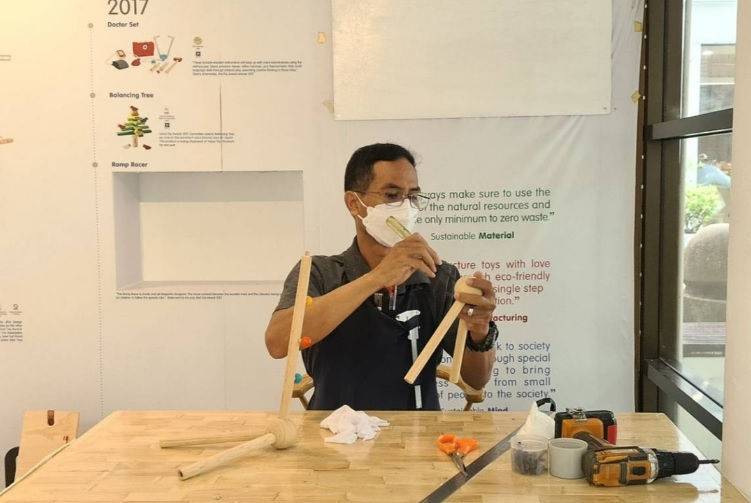
It’s stories like these that remind us why we love working with passionate people who care, not just about toys but about the world our kids will grow up in.
But at PlanToys, there's no official auditing agency paying a visit once a year to check everything against international standards, which would be required for PlanToys to get an official certification. There’s also no life cycle analysis that proves CO₂ neutrality. So even though we know firsthand how hard Vitool and his amazing team work to produce toys as responsibly as possible, we’re actually not allowed to say much about it without official documentation to back it up.
Another challenge is that over the years, we've used a lot of now outdated words and phrases to describe PlanToys and other toy brands.
You'll still spot phrases like “sustainable wood,” “eco-friendly face paint,” and “chemical-free doll clothes” in our older product descriptions, but they’re no longer allowed under the new marketing rules.
So now we’re in the middle of updating over 7,000 product descriptions. And once that’s done, we’ll start on the translations into Finnish, Swedish, Dutch, German, and Norwegian. That includes all the PlanToys product texts too, which will need a complete rewrite.
It’s a massive project, and we hope you’ll bear with us. It’s going to take some time.
But it's nice to know we’re not the only ones at it. Even huge companies are going through the same process, updating older texts written under different standards and rules for environmental communication.
And really, it’s all for a good reason. These efforts help ensure customers aren’t misled - and we’re 100% on board with that. It just takes time and attention to make sure we don’t get misled ourselves along the way. After all, you have to understand it yourself before you can teach others.