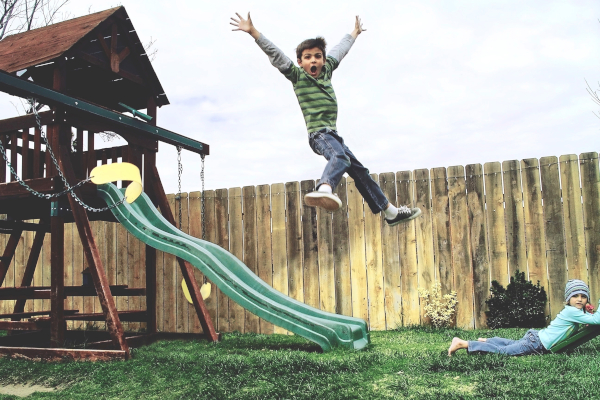

"Careful now!"
You’ve probably been there - comforting your crying child who just got hurt mid-play. Maybe they stepped on a rake left out on the lawn and got a big bump on the forehead when the handle smacked them in the face? Maybe they nearly hit you, or the curb, on their bike because they were busy staring at a squashed pigeon on the side of the road instead of watching where they were going? Maybe they walked too close to a swing and got whacked? Or they got too close to the edge of the trampoline and collided with another little jumper?
And now, there you are, trying to comfort your bawling kid, snot pouring from their nose and their piercing, high-pitched “I NEED A BAAAANDAAAID!” ringing in your ears. And then, a strange and unfortunate thing happens. Oh no! You snap. You scold the poor child. You blame them for being so careless. “How many times have I told you to watch where you’re going?!”, you hear yourself say.
Once you calm down a bit, you know it wasn’t fair of you to get so upset. You grab a bandaid and hug and comfort your little one some more. You know that deep down, all you wanted to do was prevent your munchkin from getting hurt. Because when they get hurt, it hurts you as well. That’s why you scold them, that’s why you want them to listen.
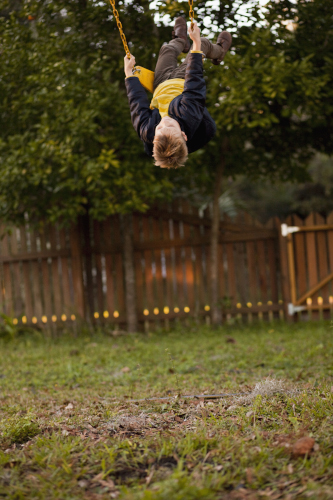
The world is a dangerous place. Bumps and bruises seem to be hiding in the tree tops, just waiting to land smack dab in the middle of your child’s forehead. You feel it’s your fault that your child got hurt. And when blaming yourself doesn’t help, you blame your child for not listening to you - and then you’re back to blaming yourself for letting them get hurt in the first place.
But research - and, let’s be honest, plain old common sense - shows that this way of thinking is totally off track.
Among other things, in this blog post we’ll get into:
- why it’s so important that we make space and time for risky play
- how rules and warnings from adults can affect children’s play
- our 3 tips for safe, free, and educational play
Our children know their own bodies best
The trending idea that adults need to protect their children from every little bump and scrape actually goes against the very purpose of playing and learning.
Several international studies on children’s risky play, including the benefits of risky play and how children manage risk and risk-taking during physical play, indicate that no one knows our children’s bodies and limits better than our little ones themselves.
The evidence is clear: the less we adults interfere with our children’s play, the better our children become at using their own bodies to make sure they don’t get hurt.
But gee, it’s hard to find that sweet spot between overprotection and genuine care!
Should we avoid risky play altogether?
True, keeping our kids safe is caring. When we keep them from getting hurt, they don’t end up sad - and that makes us feel good and safe. So, we try to steer our precious tykes away from risky play and guide them towards safer ways of having fun. But are we really doing them any favours?
Should we protect and care for our children by stopping them from falling down or getting bumps, scrapes, and bruised knees? Is it really such a great idea to keep them away from risky play?
Of course, no one likes the idea of children getting hurt. But here’s the thing: they can also get hurt when we don’t let them take risks while playing. And the kind of damage that comes from missing out on free and risky play, such as social and motoric setbacks, is far more harmful than the occasional scraped knee or bump on the head!
Research on children’s play absolutely confirms what many so-called “tough” parents and grandparents have been saying for years: a few bumps and bruises don’t break our children. They build them.
Children learn so much about their own physical abilities, limits, and motor skills when they get to play wild and free - and run the risk of getting hurt.
By the way, that’s exactly why we call our bandages "confidence bandages":
Risky play and trying new things sometimes comes with scrapes, bruises, bumps, or a good scare. And in those moments, getting a cool bandaid and a comforting cuddle works wonders for getting up the courage to try again. New skills are earned through practice - even if it means getting a bit banged up along the way. Those boo boos are badges of bravery – and they’re signs that your child is getting really good at something new.
Your child won’t get that kind of learning and confidence from being sent off to play with a litany of warnings or from hanging out in front of a screen, whether alone or with friends. Unfortunately, that’s just not how it works.
Screen time takes away from wild, free, risky fun
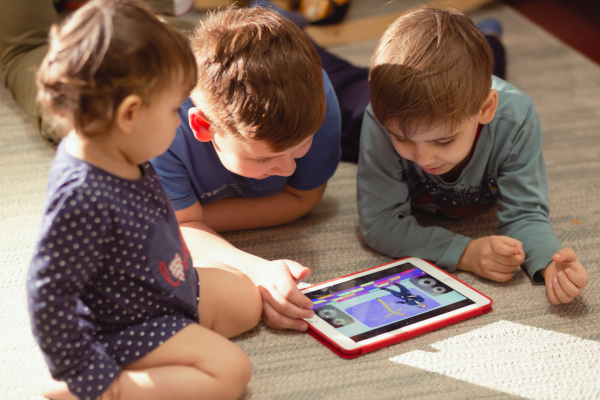
These days, digital play tends to take up most of our children’s time when they get home from school or daycare, while wild, physical outdoor play (especially the unsupervised kind!) is getting squeezed out.
There is growing concern among researchers and child experts about the amount of time our young ones spend looking at screens. Several EU countries have created national guidelines for children’s screen time, encouraging parents to dial down their kids’ digital playtime to make more room for real, physical play and social activities with friends. After all, our children need to spend time with their peers - neither screens nor parents are substitutes for playtime with friends and siblings.
We need more free play without adult supervision
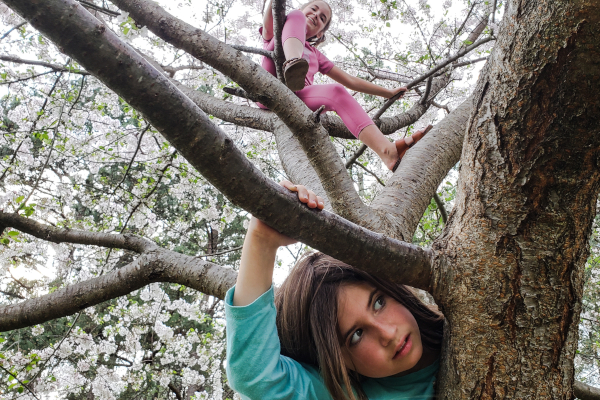
By observing children’s risky play, such as tree-climbing, trampoline jumping, and rough-and-tumble play, researchers have found that engaging in unsupervised risky play activities helps our children develop social and physical skills and learn to regulate their emotions. And vice versa: what’s pretty eye-opening is that, according to research, when adults constantly hover nearby, children tend to become unsure of themselves - and when that happens, they forget to look out for themselves!
It’s like we grown-ups burst the magic bubble when we step in. The fun fizzles out, and suddenly the game is not as exciting anymore. When we start laying down rules and keep yelling “Careful!” from the sidelines, our children lose the desire to take healthy risks. And, ironically, the more we remind them to be careful, the more they forget to be careful on their own.
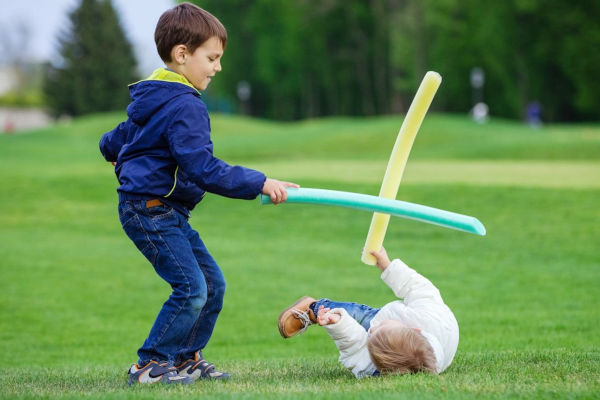
Children need to climb trees, ride fast, swing high, and have sword fights without constantly being cosseted by helicopter parents and presented with a list of rules telling them what’s too high or what’s too dangerous. That’s how they learn to be confident, self-aware, and master healthy risk-taking.
When caring turns into overprotection
“So what you’re saying is every child should just get a stamp card for the emergency room? Are broken arms and legs the new definition of fun and healthy?”, you may be wondering - especially since the stats are piling up about more and more kids getting hurt on trampolines, playgrounds, and even at home!
Consider this: maybe it’s not the way children play, or the toys and equipment they play with, that have gotten more dangerous. Maybe more supervision and more rules are not the solution. Maybe it’s children’s physical abilities, and their confidence in their own skills and limits, that are not what they used to be – and that’s why more children are getting hurt.
How did we get here? We got here because adults have been interfering too much. Children’s natural risk radar isn’t working like it used to. And older children are increasingly forgetting to watch out for the little ones when they play together. Free, risky play is becoming unfamiliar to our children, because we adults are constantly afraid they’ll get hurt. Our fear comes from a place of love, sure... but it has tipped into overprotection.
3 tips for safe, free, and educational play
We totally understand the urge to hold an adult responsible or find someone to blame when a child gets hurt. Like many other parents we’ve been there, convinced that rules are the golden ticket to avoiding accidents and injuries.
Changing that mindset is not exactly easy. But we’ve put together a few heartfelt tips for you, if you’d like to relearn how to put your child’s safety, skills, and confidence first by taking a step back instead of hovering by the monkey bars shouting “Careful!” like a broken record.
Tip 1:
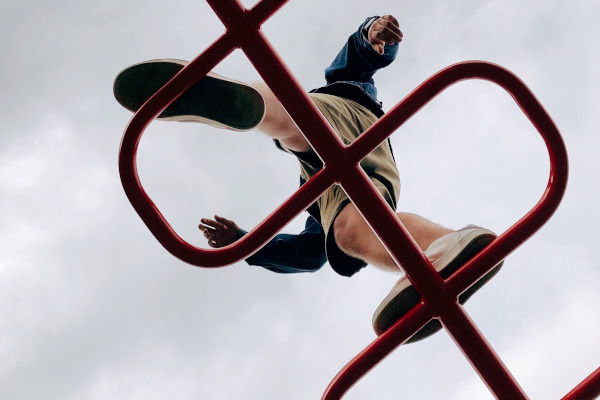
Practise the risky stuff - it’s the only way your child will learn how to handle real danger.
You need to teach your child to be risk prepared, so they know how to act when they find themselves in actual unsafe situations. You can help by coming up with some rules for risky play together. Maybe one part of the creek is off limits, but the rest is fair game? Perfect. Let your child be part of making the rules, and then trust them to play and act within the boundaries you’ve agreed on. This is the way to go - unless your child is headed out into traffic, that is.
Are you a shouty parent? I mean, does the whole neighbourhood hear you coming down the street roaring like a lion when your child sets out on their 500 m bike ride to their friend’s house? If so, you’re not spending enough time biking with your child. You both need more practice: your child needs to practise biking, and you need to practise handling risky situations in a calm and appropriate manner. Because, in all honesty, it’s kind of hard for your child to stay relaxed and in control when they see you shouting like a fire alarm with fear written all over your face.
So practise staying calm, together. That doesn’t mean you have to go flying down the main road at full throttle, of course! And don't forget helmets, bells, and preferably reflective vests, so other road users see and hear you coming.
Tip 2:
Play your way to good habits
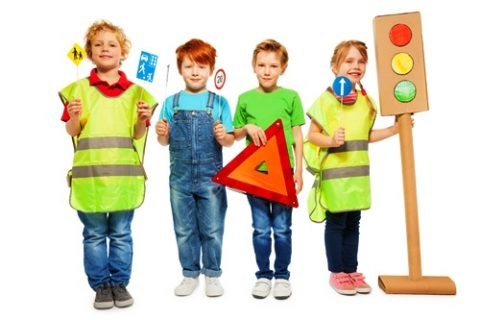
Traffic tends to be one of the most nerve-racking scenarios for parents, and unfortunately it’s a place where children can indeed get seriously hurt. So, when it comes to navigating traffic, there are certain rules your child simply needs to know.
When in traffic, there’s no such thing as free play. Traffic rules are hard and fast rules, they’re not suggestions. But to children, they can seem abstract and tricky to grasp. It can be hard for children to imagine traffic scenarios, so you can’t simply tell your child to stop at red lights and yield to vehicles and then expect them to navigate traffic correctly. You’ll have to explain it to them in a “if so and so happens, you do so and so” way – and you have to practise!
Try playing traffic games together. That way, you can talk to your child about traffic rules in an active, tangible, and safe way. Play simple reaction games like “Red light, green light” and see how your child responds. This will help you gauge how their traffic smarts are coming along.
Maybe it’s time to upgrade your biking gear? Need some new inspiration for practising traffic safety? Or do you want to grab some new knee pads, just in case? You'll find what you need in our great selection of child safety products.
Tip 3:
Face your demons
Do thoughts of trampolines keep you up at night? Does the children’s favourite climbing tree make your heart race? Or do you just really hate it when the kids are playing down by the creek? Then here’s our advice: try it yourself. We adults have a tendency to assess danger based on what we think we can do rather than our children’s abilities - and that can send our worry-o-meter into the red zone.
Go play and do what your child does. Try to get a realistic idea of what they’re actually able to do. If your child is older than 7, they’re probably not going to want you to join in, but you can still give it a go and find out if it’s really as scary and dangerous as you imagine.
Ask yourself whether the rules you’ve been making are truly helpful. Does your child really need to wear a helmet and knee pads when they climb a tree - or was that a bit of an overkill?
Too many of us make up rules and decide on no-gos without actually looking at what our children are doing - and that’s a surefire way to shut down any fun play activity that could’ve otherwise sparked lots of joy, learning, and motor skills development for your child. So take a breath. Look and learn before you lay down the law. Children like to seek out a little bit of danger - without it, playing would be too boring.
Set your fears aside and let your child play. And practise giving them space to play, at home and outside of the home, without your constant supervision. If you’re finding this hard to do, reread the part about children handling risky situations better without adults breathing down their necks.
When children get to play on their own, they learn to make space for each other and include both their bold and their more cautious friends. And the bigger kids look out for the little ones and help them learn how to handle fun, risky adventures, too.
All of that is worth remembering the next time you feel the urge to hover on the playground or start reeling off reminders to “be careful.”