




Starting School: Bond with your child while playing with numbers and letters
To all you dear parents who are still trying to sort out your emotions about the fact that your little babies are now starting school:
Breathe. Everything will be okay.
Does the distance between you and your child suddenly feel bigger?
In this blog post, you’ll find simple ways to make starting school even more fun and special for your little one, and to feel closer to them as they take their first big steps into life as a school child.
As parents of a school child, it can be hard to understand what your little munchkin is actually up to during the day
It’s not the same as back in kindergarten. You don’t get the same chance to chat with the other adults at the cloakroom cubbies.
When you finally get to see your precious kiddo, you probably have a conversation that goes something like this:
”Hey, sweetie. What did you do at school today?”
”Nothing.”
”Did you have fun at school?”
”Yes.”
”Wow, that sounds… wait, what do you mean you did nothing? Didn’t you learn a bunch of stuff?”
”I don’t remember. What's for dinner?”
”Well, did you learn some letters or play a fun game?”
”I don't know.”
”What about your math teacher, is she nice?”
”Yeah, kind of.”
”That’s great. How about...”
And so on and so forth. This whole interrogation goes nowhere. It’s impossible to make your child tell you what they did during the day. This calls for other means – and that is a good thing, because good times together are just around the corner!
It’s all about letting your child feel that you are still there to support them and show them you are interested, even though the distance between you has grown.
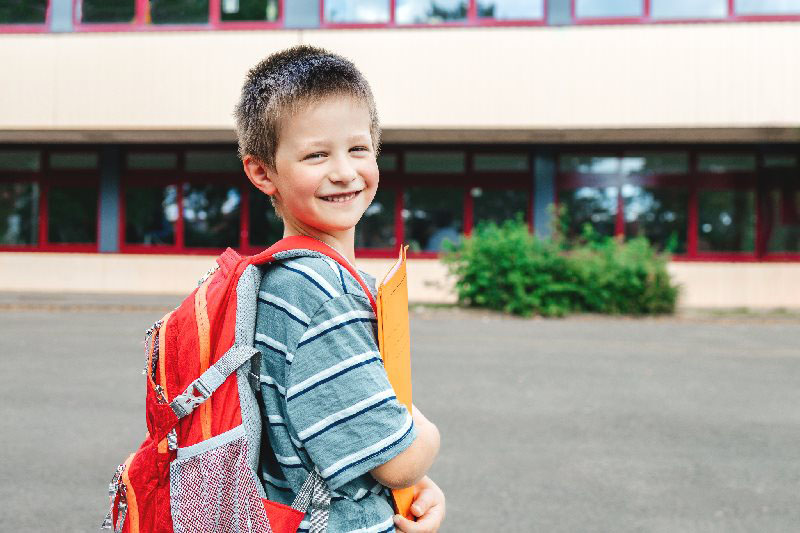
Starting school: How to support your child
Finding ways to get involved in your child’s world that are fun for both of you is not that difficult. You can actually make school even more enjoyable for your child by participating in their learning in a positive and engaging way.
Below are three fun ways of bonding with your child and supporting their learning as they start school:
1: Scattering
You can casually leave various learning materials lying around the house.
For instance, you can put magnetic letters on the fridge, swap the Disney jigsaw puzzles for puzzles involving even and odd numbers, buy foam letter bath toys for the tub, or hang a poster in the hall that shows how to tell time. If numbers and letters are a natural part of your child’s everyday life, they will easily be able to remember what actually happened at school today.
Organise your home around the fact that you now have a school-aged child and make awareness of numbers and letters a natural part of your home.
2: Cosy Moments
Maybe you sit down and enjoy some fruit and a cup of tea together when you get home. In this case, it’s a great idea to keep little educational games lying about, and there is a wealth of them to choose from.
A handful of Centicubes make great building blocks, and they will often inspire your child to tell you a little bit about friends of 10 or small math problems they remember from class while you’re building a cool robot out of the cubes, playing with alphabet alligators, or playing Fishing for Tens.
Take a look at ”Friends of 10”, ”Triangles”, or ”Phonetic”, among others, and find a couple of things that can make practising at home fun for your child.
3: Awards
Your child may have trouble finding the words to tell you what happened at school, no matter how many times you ask them.
Throughout your child’s first year at school, the social aspect of school will likely be what’s most important to them. Academic learning will be introduced gradually, but your child’s key experiences will probably be social. These social experiences are very important for your little one, because a safe environment is crucial as they learn new skills.
So, try asking your child more specific questions.
A good way of doing so is asking your child whether there is another student or an adult at school who should get an award today. If your child says yes, ask them who and why.
You could also ask them if there is a student or adult at school who should definitely not be getting an award today. Who? Why?
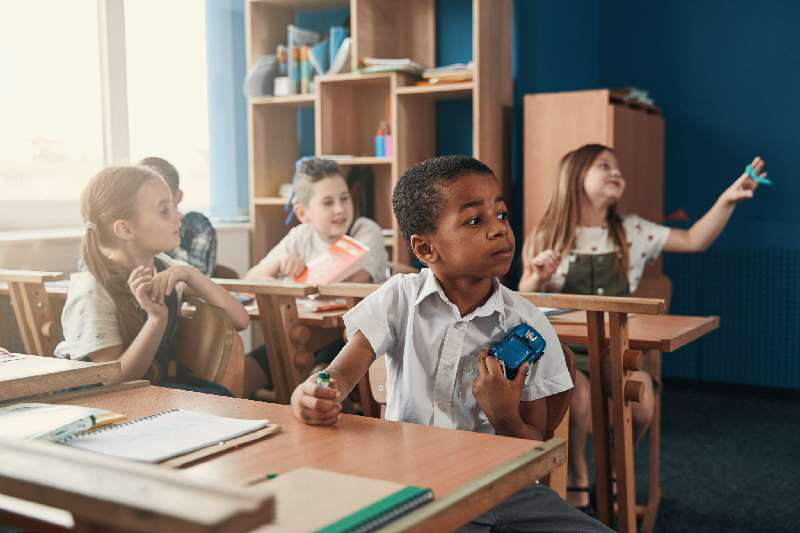
During the first while at school, mastering social skills is as important as being able to count to 10 or write your own name - they're actually even more important.
Courage, curiosity, and self-esteem are your child’s most important tools.
Your child needs your support and trust, and they need to feel encouraged by your confidence that starting school is an exciting and challenging experience – an experience your child is ready for and will greatly benefit from.
Want an easy list of tips for starting school?
There is lots and lots of expert advice out there on how to best support your child, their educators, and yourself when your child is starting school. Here’s a selection of general tips and reflections which we at ToyAcademy can definitely get behind:
- Approach the school, the teachers, the other parents, and their children with positive expectations.
- Trust that your child’s teachers have your child’s best interest at heart.
- Your child may be nervous, excited, or tired during the first days and weeks. Be prepared to comfort them and spend time with them.
- Avoid always involving your child in your adult considerations and questions.
- Work with the other parents and the teachers to create a set of rules for good, positive communication and information sharing.
- Always listen to your child with empathy and understanding, but remember that people can experience things differently.
- Contribute to an inclusive classroom community. Your child needs diverse playmates.
- You are a role model for your child. Show them the way to learning, positive interactions, and a sense of community.
- Many schools do not give homework, but they often offer various social or academic activities which parents can support.
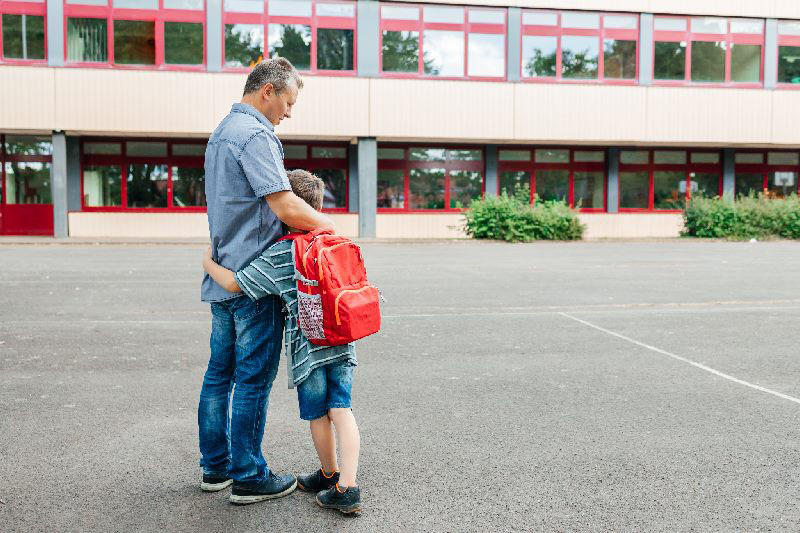
Knowledge is best retained when learning takes place in several different ways. So, don’t hesitate to make use of workbooks, games, play, and conversation when helping your child explore specific subjects and concepts.
The interest you show in your child’s activities at school lets your child feel your support and care. This, in turn, boosts their self-esteem and motivation to keep learning.
And remember: everything will be fine!