Have you checked out our different types of clay for your crafting projects?
Once upon a time, we had the choice between playdough and natural clay when making ashtrays or jewelry holders as Christmas presents for grandma and grandpa. The world was, quite simply, more straightforward when it came to the selection of creative supplies and possibilities for creative expression.
Today, the options for sculpting and modelling are endless. At ToyAcademy, we carry classic playdough as well as various types of clay and modelling sand.
There are 6 main types of clay and modelling sand:
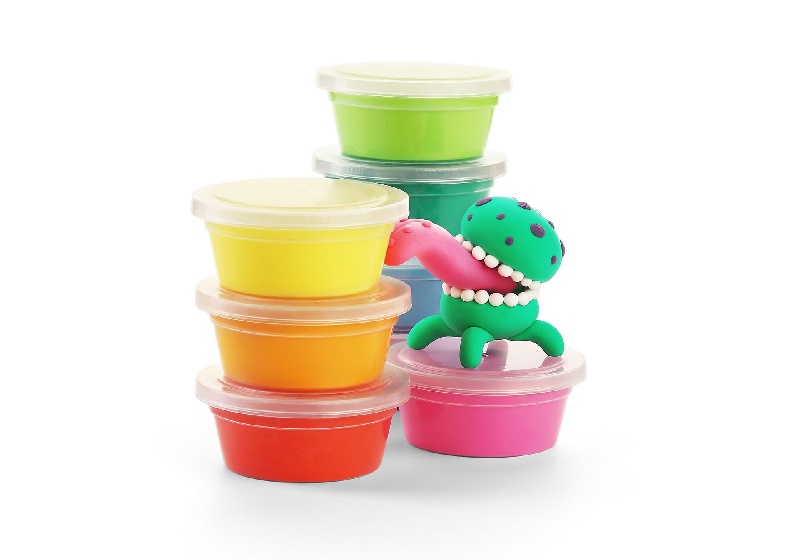
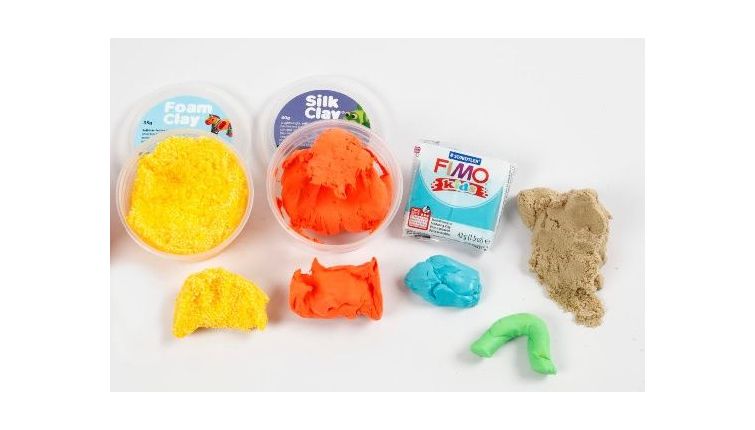
Pearl Clay. The red tub in the photo.
Foam Clay. The yellow tub in the photo.
Silk Clay. The orange tub in the photo.
FIMO Kids. The blue tub in the photo.
Soft Clay. The green tub in the photo.
Sandy Clay modelling sand. The sand-coloured tub in the photo.
We also carry several types of classic playdough as well as Hey Clay, which didn’t make it into the “class photo” for this blog post.
But what to choose? What’s the difference between Pearl Clay and Fimo Clay? And what is Silk Clay made of? Read along here and find out more about the different varieties, which are all brilliant for stimulating your child’s fine motor skills, tactile sense, and creativity.
Unfortunately, we can’t guarantee that we always have all 6 types of clay in stock in our webshop.
What is Pearl Clay?
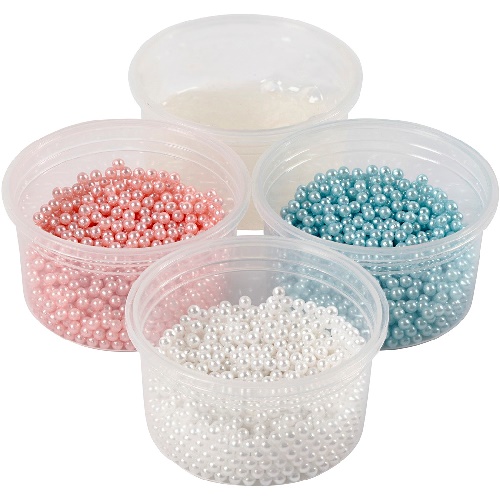
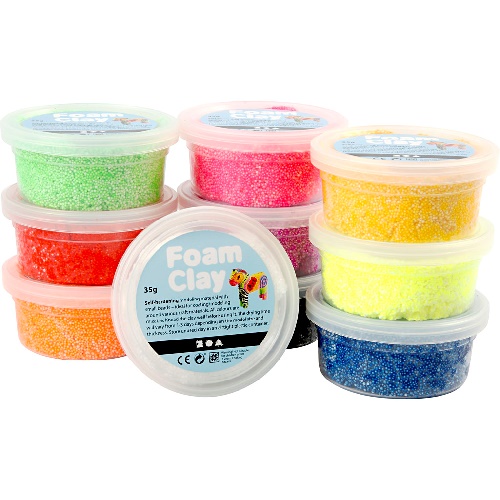
Pearl Clay kind of sounds like a rock band. But it's a clay made of polymer, glycerin, and approved preservatives.
What sets Pearl Clay apart from other modelling compounds is that you need to manually mix tiny pearly plastic beads into a gel that feels a bit like clear slime.
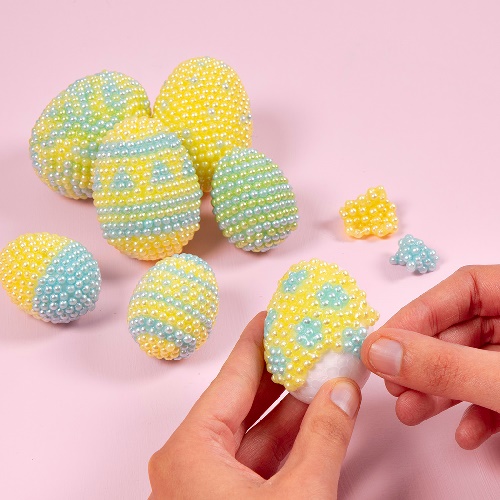
- Pearl Clay is perfect for decorating figures or covering various surfaces.
- It works especially well on other clays, wood, polystyrene, or other slightly textured surfaces.
- If you want to decorate smooth metal hair clips or barrettes, put a piece of foam sheet under the Pearl Clay for best results.
- Pearl Clay hardens at room temperature and takes about 24 hours to dry.
- Pearl Clay is not sticky to work with.
- Mixing and sculpting Pearl Clay is fun and great for your child's tactile sense.
- Pearl Clay is suitable for children from age 5 with adult supervision.
Ehm… but what about the “slime” part?
If you feel a little hesitant seeing the gel in Pearl Clay referred to as “slime”, we understand. But don’t worry. Naturally, Pearl Clay (like all other clays sold at ToyAcademy) fully complies with the REACH regulation and all EU legislation regarding safety and ingredients. In fact, all products in our webshop do - even if we don’t specifically say so in every single product description.
For toys and products that come into contact with your child’s skin, such as clay, we sometimes specify that the item meets current safety standards, because our customers regularly ask about it.
But rest assured: whether or not it’s mentioned in the description, every single product in our shop is safe to play with and meets all legal standards.
What is Foam Clay?
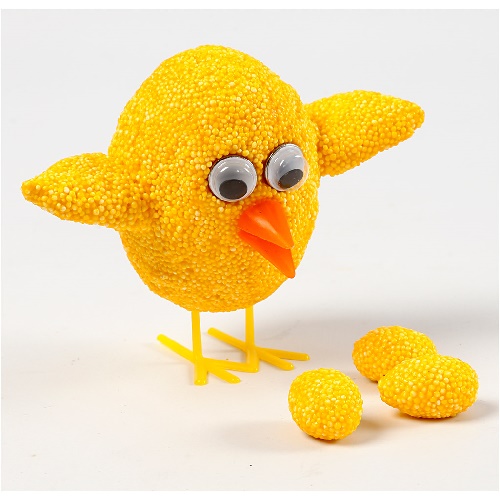
Just like Pearl Clay, Foam Clay consists of a polymer, glycerin, and approved preservatives. Foam Clay contains lots of tiny polystyrene beads (like styrofoam balls) and, unlike Pearl Clay, it comes pre-mixed.
- Foam Clay can be spread out and stretched.
- Great for decorating small and large figures.
- Hardens at room temperature. Foam Clay typically dries in approximately 24 hours, depending on the thickness of your project.
- Foam Clay sticks particularly well to rough surfaces, so it’s a good idea to sand down smooth surfaces before covering them.
- You can mix different colours of Foam Clay, but do not mix it with other types of clay.
- Foam Clay is suitable for children from the age of 3 with adult supervision.
NOTE: Foam Clay and Playfoam are two distinct brands and products. Playfoam does not harden, and its polystyrene beads are a bit larger than those in Foam Clay. Playfoam can be used over and over like playdough, whereas Foam Clay is not reusable because it hardens. Playfoam also comes in Putty and Sand varieties.
What is Silk Clay?
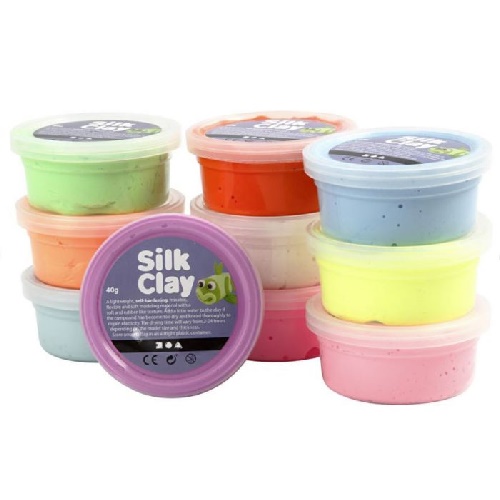
Silk Clay is light, soft, and mouldable and consists of a polymer, glycerin and approved preservatives.
- Silk Clay has a silky soft, foam-like texture
- You can easily mix different colours of Silk Clay - but we do not recommend mixing it with other types of clay.
- Silk Clay hardens at room temperature within 2-24 hours, depending on the size and shape of your craft.
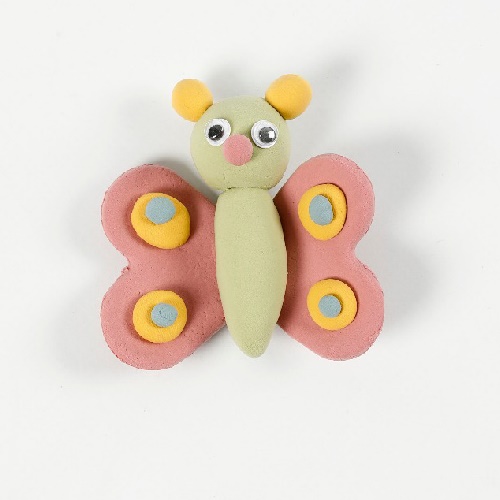
- Silk Clay is suitable for making lots of different figures and ornaments.
- The craft hardens with a matte finish and is ultra lightweight.
- Silk Clay’s lightweight properties make it ideal for crafts like homemade earrings.
- Silk Clay is suitable for children from the age of 3, with adult supervision.
What is FIMO kids/FIMO clay?
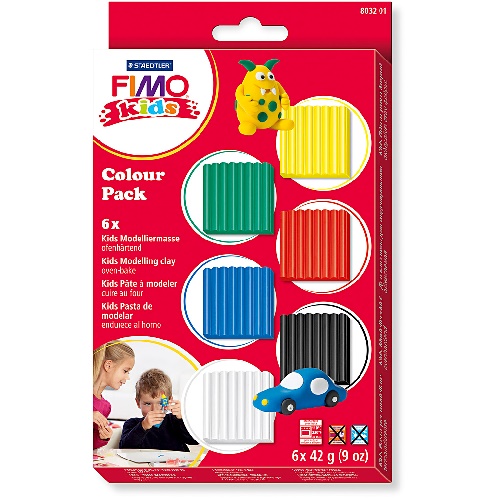
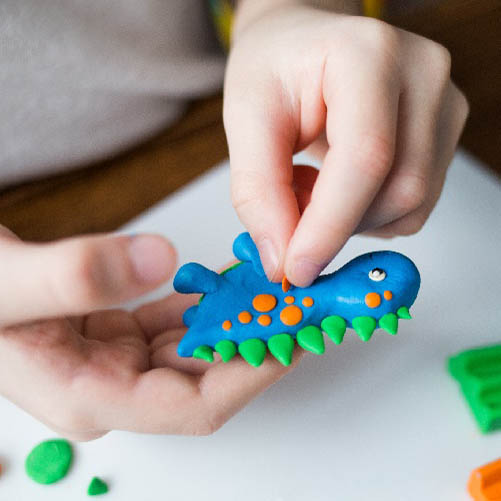
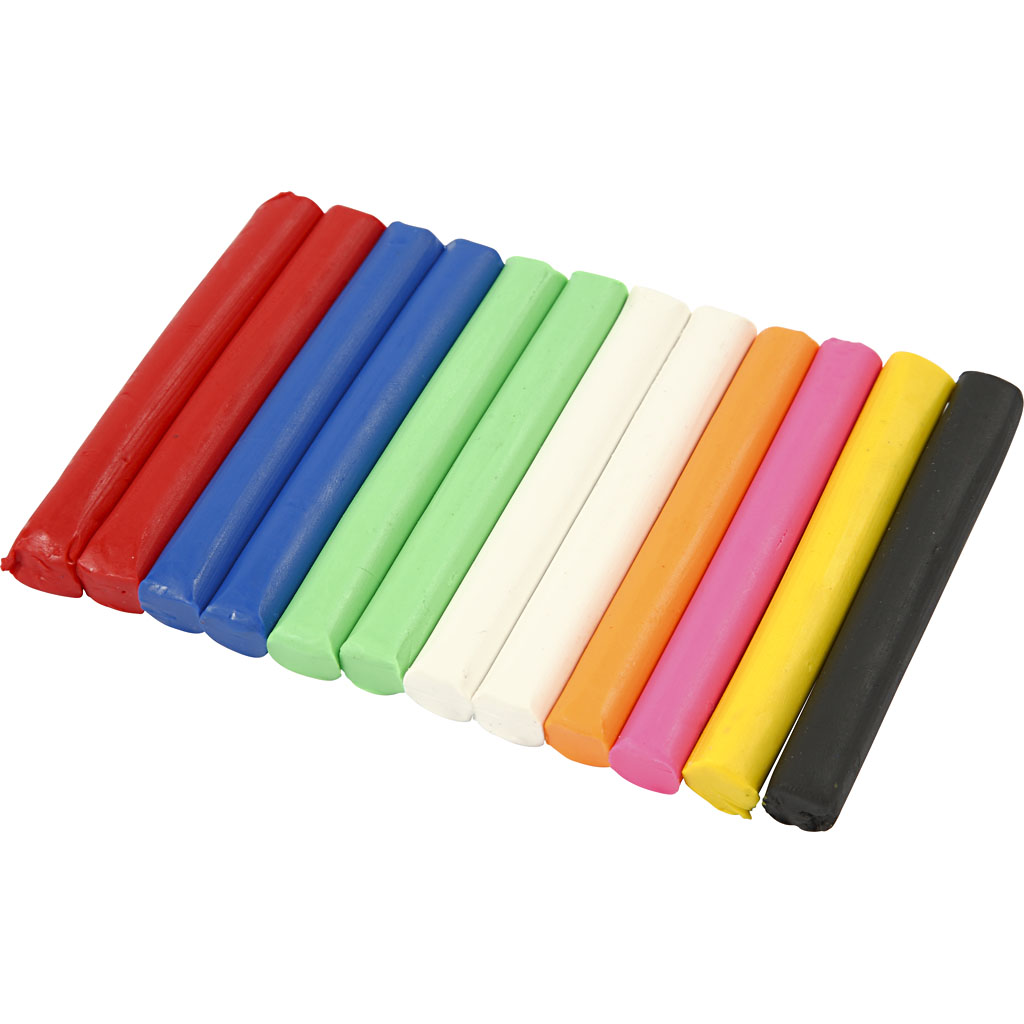
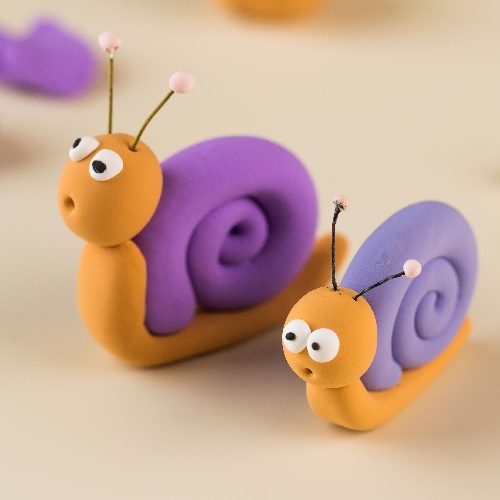
FIMO clay is a soft polymer clay.
- It has a slightly shiny surface.
- It is very suitable for making pendants, figures, jewelry, and other finely detailed crafts.
- FIMO clay hardens when baked in a regular oven for 30 minutes at 110 degrees Celsius.
- We do not recommend mixing FIMO Kids with other types of clay.
- Children from the age of 8 can play with FIMO Kids without adult supervision.
- FIMO Kids is suitable for children from the age of 3 with adult supervision.
What is Soft Clay?
Soft Clay is a child-safe modelling compound made from paraffin wax. It is shiny and does not leave stains.
- Soft Clay is soft and pleasant to the touch and can be moulded and mixed in endless ways.
- Soft Clay does NOT harden.
- Soft Clay doesn’t tend to dry out, as long as you make sure to wrap it after every use.
- You can mix different colours of Soft Clay.
- Soft Clay cannot be softened with water or mixed with other types of clay.
- Soft Clay is suitable for children over the age of 3 with adult supervision.
What is Sandy Clay modelling sand?
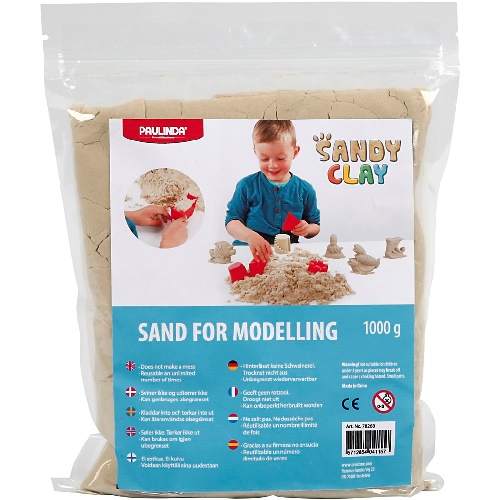
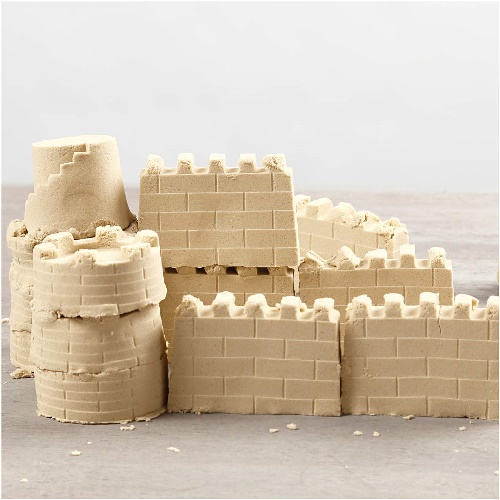
Sandy Clay consists of quartz sand and a polymer fixing agent. This type of play sand is great for modelling and sculpting. It’s not actually a type of clay, but we’ve decided to include it in this blog post to tell you a little bit about why modelling sand is so wonderful. The sand is self-sticking, so your child can mould it into building blocks and all sorts of shapes and figures. It holds its shape pretty well, until it suddenly falls apart and melts down in that delicious play sand way.
- Sandy Clay is somewhere in between MadMattr and Kinetic Sand. MadMattr holds its shape better and has a firmer feel, while Kinetic Sand is softer and more “alive”.
- Sandy Clay is a wonderful way to stimulate fine motor skills and the tactile sense.
- Kneading and squeezing the sand feels absolutely delightful. At the ToyAcademy office, several of us keep modelling sand around for those moments when we need to ground ourselves and let our minds drift away from keyboards and phones.
- Sandy Clay is suitable for children from the age of 3, with adult supervision.
What is Hey Clay?
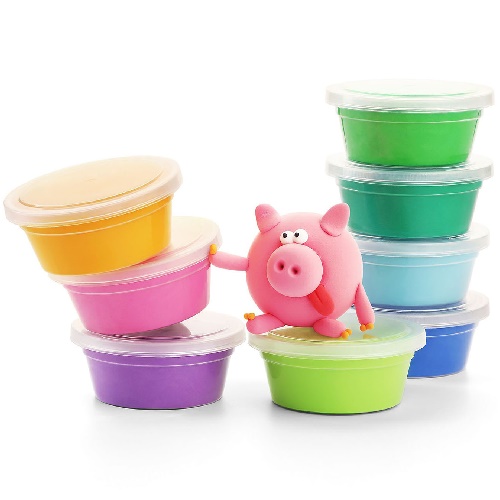
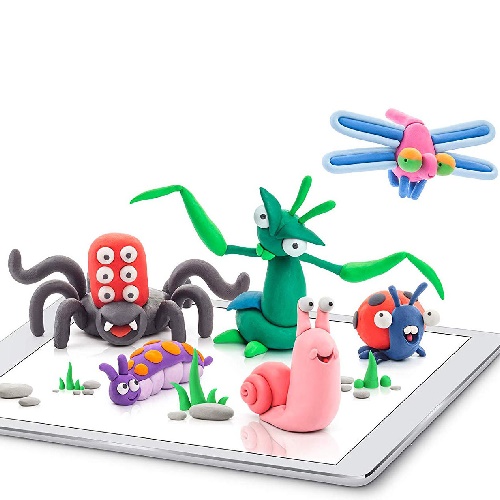
Hey Clay is a soft, mouldable, and ultra lightweight modelling compound similar to Silk Clay.
Hey Clay sets include a code for an app full of jumping, dancing Hey Clay animals which you can try to sculpt. The app provides thorough instructions, and the animals turn and spin, letting you view them from all angles so you can recreate them.
- Hey Clay hardens within 24 hours at room temperature.
- With the app, Hey Clay is great for combining interactive, virtual, and analog play in a new way.
- Manually kneading, squeezing, and sculpting the clay fires up your child’s fine motor skills and tactile sense.
- You can easily mix different colours of Hey Clay.
- Suitable for children from the age of 3, with adult supervision.

Is clay safe to play with?
The short answer is yes. All our products meet EU safety requirements for ingredients and use. And, fortunately, EU regulations for toys are quite strict, so our children are well-protected.
We recommend that you supervise your child when they play with clay. They might be tempted to have a little taste, especially if you just created a scrumptious-looking strawberry together.
In this day and age, our children are exposed to many different materials and substances. Many parents have a completely understandable - and healthy - scepticism about the ingredients in modelling compounds like Soft Clay, Silk Clay, and Foam Clay that come into contact with children’s skin during play.
Here at ToyAcademy, we keep in close contact with our suppliers and make absolutely sure that the products in our webshop always comply with the most up-to-date regulations.
EU regulations around toys are quite stringent, and some member states may even implement stricter local requirements regarding toy ingredients and use, which we appreciate. All our products have undergone and passed current EU testing.
As a customer with ToyAcademy, you are not entitled to receive copies of the full ingredient lists for products such as Silk Clay, since the exact ingredient lists are usually protected by patents and copyrights.
That said, you are always welcome to contact us if you would like to see documentation that a product meets current requirements. Write us and let us know the item number (SKU) you wish to know about, and we will happily provide such documentation.
We hope this guide has given you an idea of our different kinds of clay and what they are suitable for.
Have fun.