STEM stands for Science, Technology, Engineering, and Mathematics
”Sit down, take out your workbooks, go to page 14: ”Right triangles”.
You know the drill. Children need to learn to solve math problems, write, count, measure, and master logical reasoning. At school, they learn core subjects like biology, mathematics, and geography. At least that’s the way it has been for many years, and that’s our traditional way of understanding children’s education.
However, recent research shows that a traditional classroom setting is not the best way for children to learn. It’s too passive. Different approaches are needed to truly support children on their learning journeys.
The STEM way of learning science is based on concrete problem-solving and curiosity.
What sets STEM apart from other approaches to learning science is that it breaks down existing divisions between the four academic disciplines of science, technology, engineering, and mathematics. Furthermore, it emphasises applied and practical/investigative learning rather than theoretical instruction. In simpler words, it’s learning by doing.
As Aristotle said, “For the things we have to learn before we can do them, we learn by doing them.”
A bit of background knowledge about STEM for children
The subjects of science, technology, engineering, and mathematics have traditionally been taught in dry, theory-based ways. According to former U.S. President Obama, this has led to a radical shortage of competent people in these particular fields, which are so important for societal and scientific development.
In 2009, Obama launched the campaign “Educate to Innovate,” which aimed to increase the American population’s literacy and STEM skills.
There is a global shortage of STEM professionals. Countries all over the world allocate billions in their national budgets to the promotion of STEM in the hopes of encouraging many more children and young people to pursue careers related to this new fusion of subjects.
The applied learning approach that is central to STEM is currently gaining popularity all over the world and is highly successful.
So, naturally it’s on our agenda at ToyAcademy, too – STEM is here to stay, and we’re so happy about it.
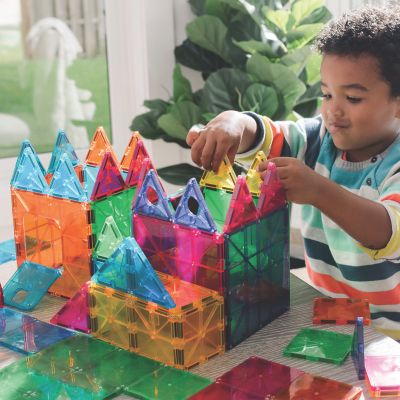
STEM playing and learning for children
Danish professor of developmental psychology Dion Sommer argues that we should think of children’s play as a path to learning.
In line with international findings, Sommer’s research shows that approaching the world around us through free and exploratory play is a far more effective learning strategy than memorisation, math problems, and theoretical explanations.
And that's the very foundation for ToyAcademy’s product selection and our very reason for being: the best way to learn is to start with play, with your child, and with all the natural ways in which we humans explore the world around us.
So far, so good - but we are particularly excited about the interdisciplinary approach of STEM.
Why should you have to choose between looking through either your “biology glasses” or your “physics glasses” when, in reality, the world around us cannot truly be experienced as neatly divided academic disciplines?
Curious children play and learn better in STEM
Learning is natural for our brains.
Human beings learn from the moment we are born, and we continue to do so throughout our lives, although we learn at a slower pace as we age. It has been shown that the most important factor for learning is motivation - that is, the desire to learn. And that desire is the strongest when our motivation comes from within, and when learning something feels meaningful because it is useful and tangible right here, right now.
Children learn better when they get to be at the centre of the learning process, and when their own experiences drive their learning.
STEM breaks down academic barriers and motivates children
STEM is an approach to learning which combines several different sciences and encourages students to think beyond rigid traditional academic boundaries. It’s about working with the different sciences with a connection mindset.
The idea that disciplines like architecture, astrophysics, and chemistry are separate fields is an understanding we have invented - children have a much more spontaneous approach. They don’t consider whether a thought or an experiment falls within the realm of biology, chemistry, or maybe astronomy.
They don’t get stuck considering what journal or e-library to turn to for relevant literature.
They come up with a good idea for solving a specific problem, and then it’s just a matter of encouraging their fascination and motivation to create a good solution.
Quite often, that solution will entail the combination of scientific disciplines that STEM represents.
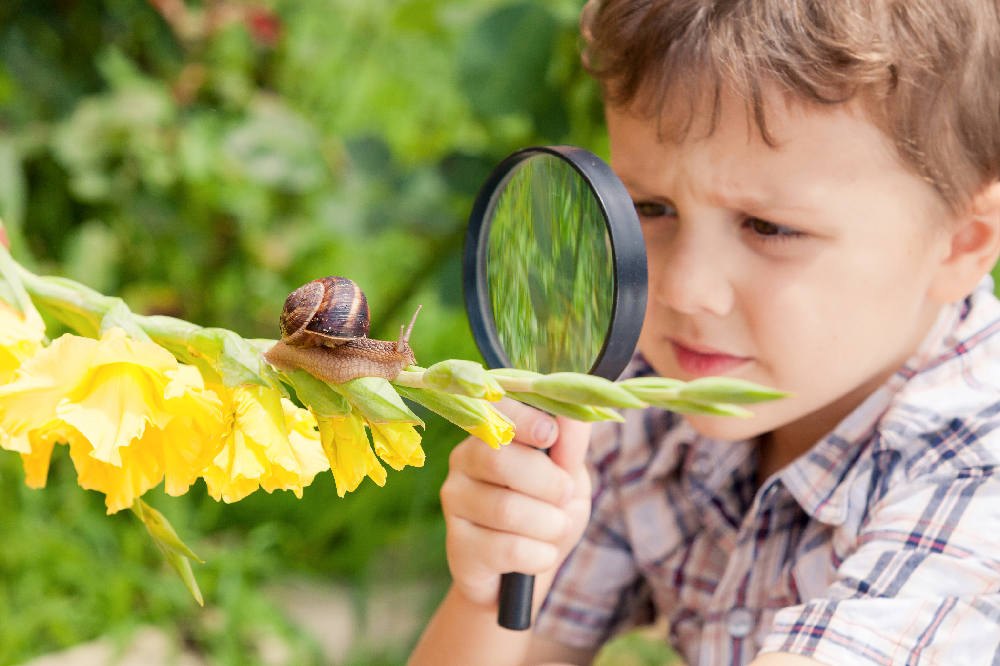
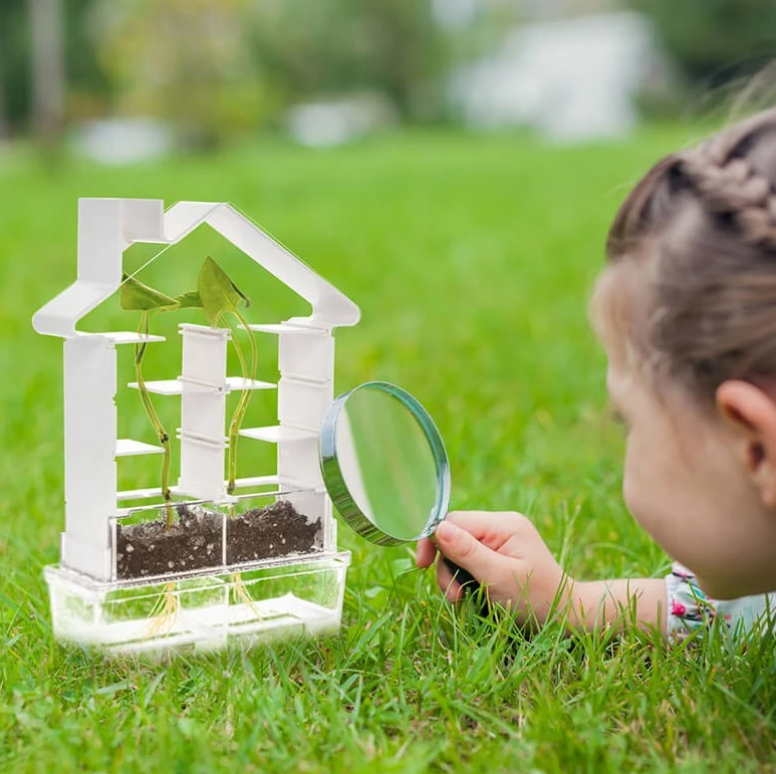
Science doesn’t have to be tedious and tiresome - go catch a bug, talk about it, measure it, recreate it with blocks or Magna-Tiles, or try drawing it together.
Learning should be fun.
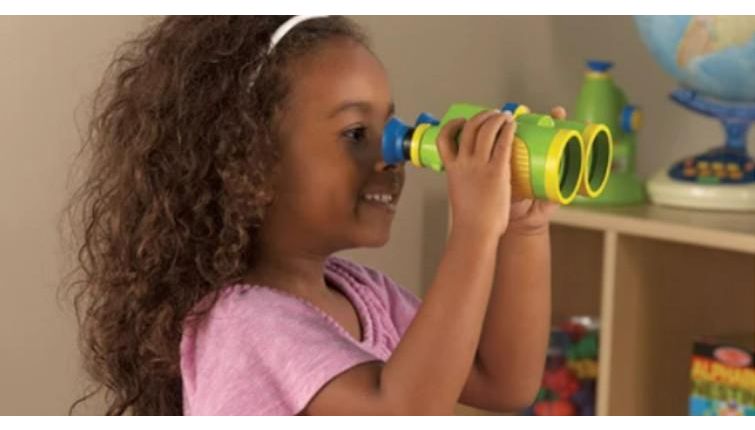
Children learn through experience. For example, when you go for a walk with your child, bring a bug jar or a spider catcher and check out insects together. We have lots of wonderful gear for exploring the fascinating world of bugs and critters.
Instead of asking, “Why does the spider weave a web?”, try asking, “How does the spider weave a web?” That way, you’re focusing on the physical, tangible world that your child can actually see and feel.
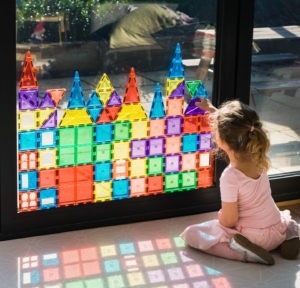

Another example could be your child finally realising what Pythagoras was trying to say about those triangles when the Pythagorean theorem helps them solve a real-life problem with constructing a turret for their stunning, luxurious DIY miniature mansion.
Here, math, architecture, and physics all come into play, all while your child is building.
Or maybe you’re spending time outdoors with your child and they discover the amazing perfect spiral pattern of a snail shell. What kind of shape is that spiral? Where else do we come acroos that shape? Why are snail shells shaped like that?
Active STEM learning for young children
The human brain learns the most in our first three years of life. During this period, connections between neurons (brain cells) form at lightning speed, between 700 and 1,000 per second! But after those first three years, this development starts to slow down, and that intuitive childhood learning starts to fade
That’s why it’s so important to let even very young children explore the world and use their natural curiosity. You can help your child do so with our range of STEM learning toys.
STEM for children is on the rise
STEM is growing. In schools and clubs all over the world, educators increasingly approach children’s science through real-life experiences instead of textbooks or passive classroom lectures. Students actively participate in solving problems with no theoretical framework and without the usual divisions between the different branches of science.
Another exciting sign that the STEM approach is gaining ground internationally is the growing popularity of so-called "Makerspaces" in public libraries. A makerspace is a physical space full of computers, 3D printers, laser cutters, and all sorts of technology, where users can let their tech creativity flow however they please. Makerspaces are all about coming together to build, create, invent, design, and play. Robots, video games, apps, 3D-printed Barbie shoes of your own design - you name it!
Globally, user-driven innovation, networking, and creativity are at the heart of the Maker movement, and social media plays a huge role in sharing ideas and experiences. Maker culture breaks down social barriers related to class, level of education, career, and cultural background - everyone’s welcome, everyone contributes, and everyone can learn from each other. It’s hands-on, it’s happening right now, and it’s based on real-life experience.
All the branches of science are at play in bringing ideas to life. It’s ultimate STEM, and both children and adults participate equally in the name of creativity - and at ToyAcademy, we couldn’t be more excited!
Children must learn how to learn
Internationally acclaimed professor and author Lillian Katz argues that being able to write and do math isn’t really a learning goal in and of itself, although we often treat it as such in standardised testing. Rather, Katz argues, these skills are tools that help us analyse and understand real phenomena in the world around us. And it’s exactly that motivation, and the desire to understand, that should be the foundation for all learning!
First and foremost, children should learn how to learn. As a parent, the best way to help your child do so is by letting them experience different situations and contexts in which tools like equations and letters become useful for understanding something tangible. STEM is an alliance between the sciences, real-life contexts, children and adults, learning, and creativity.